Founders sell because no one else can. Your product conviction is unmatched. You understand the problem deeply. You know your ideal customer intimately. You can close deals that a hired rep couldn’t close in month one.
But there’s a brutal constraint: you have 100 other jobs.
The startup sales stack needs to be lean. You can’t afford bloated enterprise tools with features you’ll never use. You need bare-minimum effective: CRM that tracks pipeline, prospecting that generates conversations, video conferencing that works. Get those three things right, keep monthly spend under $500, and focus the rest of your energy on selling and building.
The real cost problem isn’t tool cost—it’s admin cost. After every demo, the CRM needs updating. After every call, follow-ups need scheduling. After every objection, next steps need recording. At founder velocity—5-8 demos per day—admin work becomes the bottleneck. Every hour spent in the CRM is an hour not selling, not fundraising, not building product.
Here’s the leanest viable stack. And here’s the one addition that acts as a force multiplier on the scarcest resource: your time.
Founders close deals at 2-3x the rate of hired reps in the early stage. Product knowledge is unmatched. Conviction is unmatched. The ability to adapt positioning in real time based on prospect objections is unmatched.
But founders also have 100 other responsibilities: investor calls, product roadmap, team hiring, operational fire-fighting, the actual product building.
The sales process is supposed to be: demo, take notes, follow up, close. But in founder reality, it’s: demo, remember to take notes, text notes to yourself, forget to follow up because you were in a product meeting, dig through emails to understand where that prospect was in the deal, send a generic follow-up because you can’t remember what you discussed.
Founder-led sales works when it’s the focus. It gets derailed when founder attention is divided.
The lean stack solves for this: pick tools that require minimal admin overhead. Let the tools do the work, not you.
What It Is
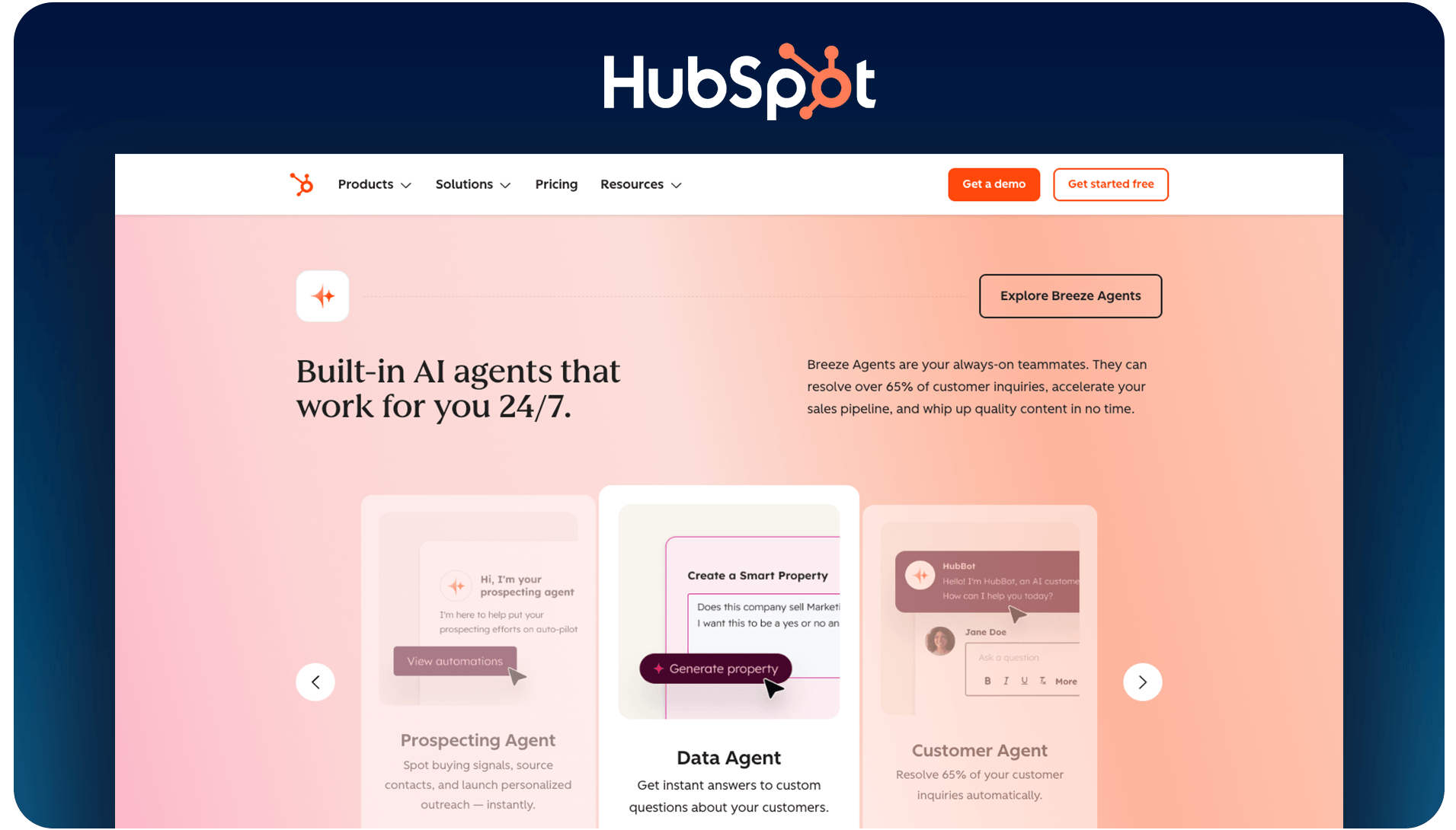
HubSpot’s free tier is legitimately powerful for early-stage companies. Not a limited demo. A real, functional CRM.
Core Functionality
The free tier gives you an unlimited contact database. You can create a deal pipeline and move deals through stages. Email tracking shows you who opened your follow-up emails and clicked your links. You can create basic email sequences for repeated outreach.
When you’re ready to scale and need automation (email sequences that trigger based on deal stage, for example), you upgrade to the Starter plan at $50/month. Still lean. Still focused on core functionality.
The Limitation
HubSpot Free and Starter are genuinely functional CRMs. The limitation isn’t the tool. It’s the data quality. HubSpot is only as good as the information you put into it.
After a 30-minute demo covering the prospect’s use case, pricing questions, technical requirements, decision timeline, and competitive evaluation status—all of that intelligence needs to get into HubSpot. At startup pace, with 8-10 calls per day, manual entry is the first thing to get cut. You remember the gist. You remember they were interested. You forget the details that actually matter: their team size, their budget ballpark, their timeline.
The result: HubSpot tracks that the deal exists. HubSpot doesn’t track why it matters or what it’s going to take to close. That gap is a core driver of why CRM adoption fails — founders and early reps know the tool isn’t capturing the right things, so they stop trusting it.
What It Is
Apollo combines B2B prospecting data with email outreach automation. It’s the two-tools-in-one choice for startups who can’t afford to buy ZoomInfo and Outreach separately.
Core Functionality
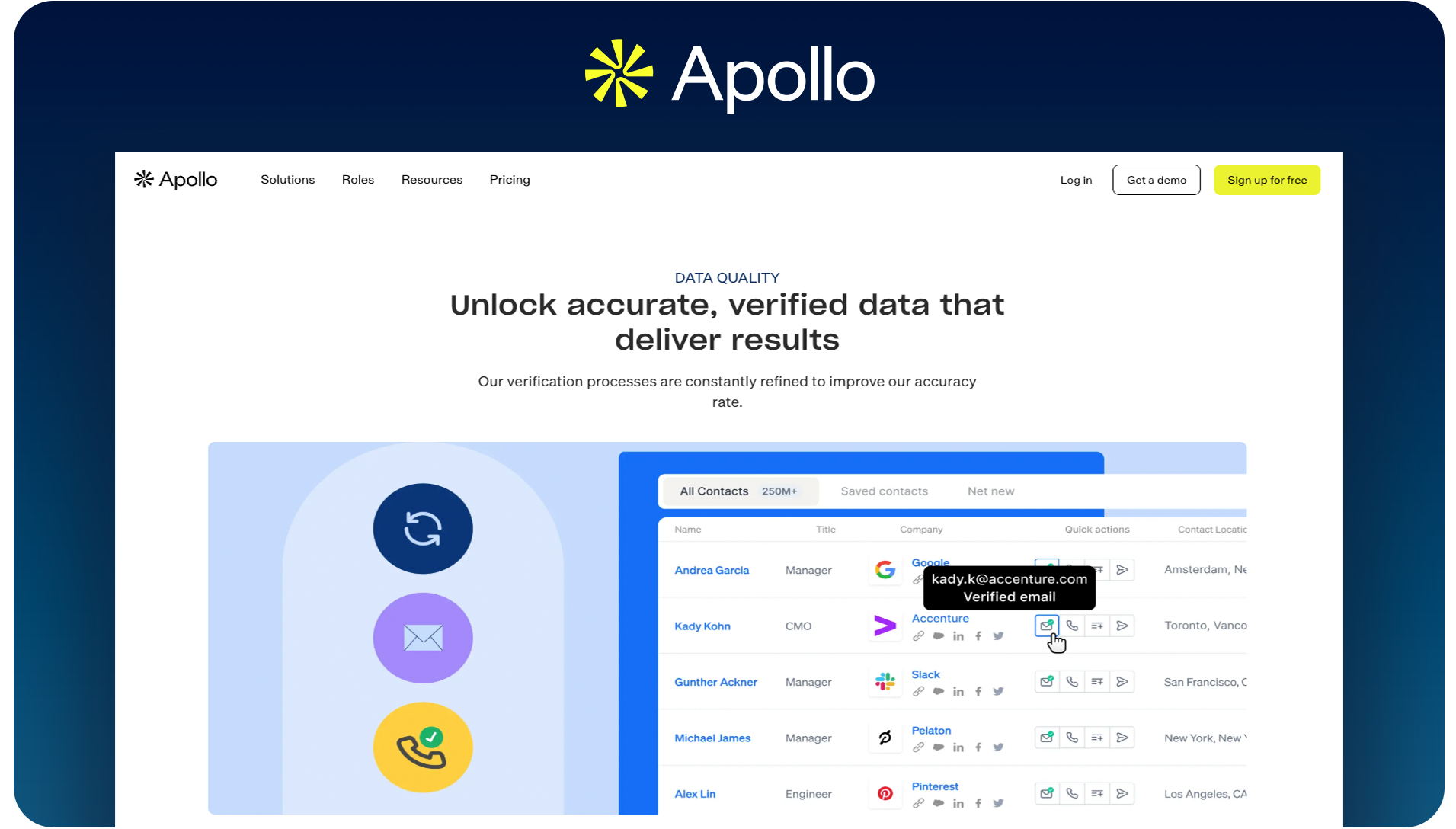
Apollo’s contact database has verified B2B prospect data—millions of business emails and phone numbers across industries and company sizes. You define your ideal customer (company size, industry, revenue range, role), and Apollo surfaces the matching contacts.
For each contact, Apollo provides additional intelligence: company description, revenue, employee count, recent funding, website, LinkedIn profile. This is the starting point for your outreach list.
Email sequences automate your follow-up. Set up a five-email sequence that runs to prospects who didn’t respond to the initial reach-out. Personalize the sequence with their company name, their role. Schedule sends at optimal times. Let Apollo handle the delivery while you focus on other prospects.
The Limitation
Apollo handles the outreach side brilliantly. You get a list of perfect prospects. You send them a personalized email. They reply. Great.
But like all engagement tools, Apollo records activity, not conversation intelligence. It tracks that an email was sent, opened, clicked. It doesn’t record what was actually said in follow-up emails or discovered on calls.
When a prospect responds positively to an Apollo sequence and you jump on a call, the conversation reveals their specific use case, their exact constraints, why they want to buy, what competitors they’re evaluating, what would make them choose you, when they want to decide. That’s magic. That’s founder value. And Apollo isn’t the tool that captures it.
What It Is
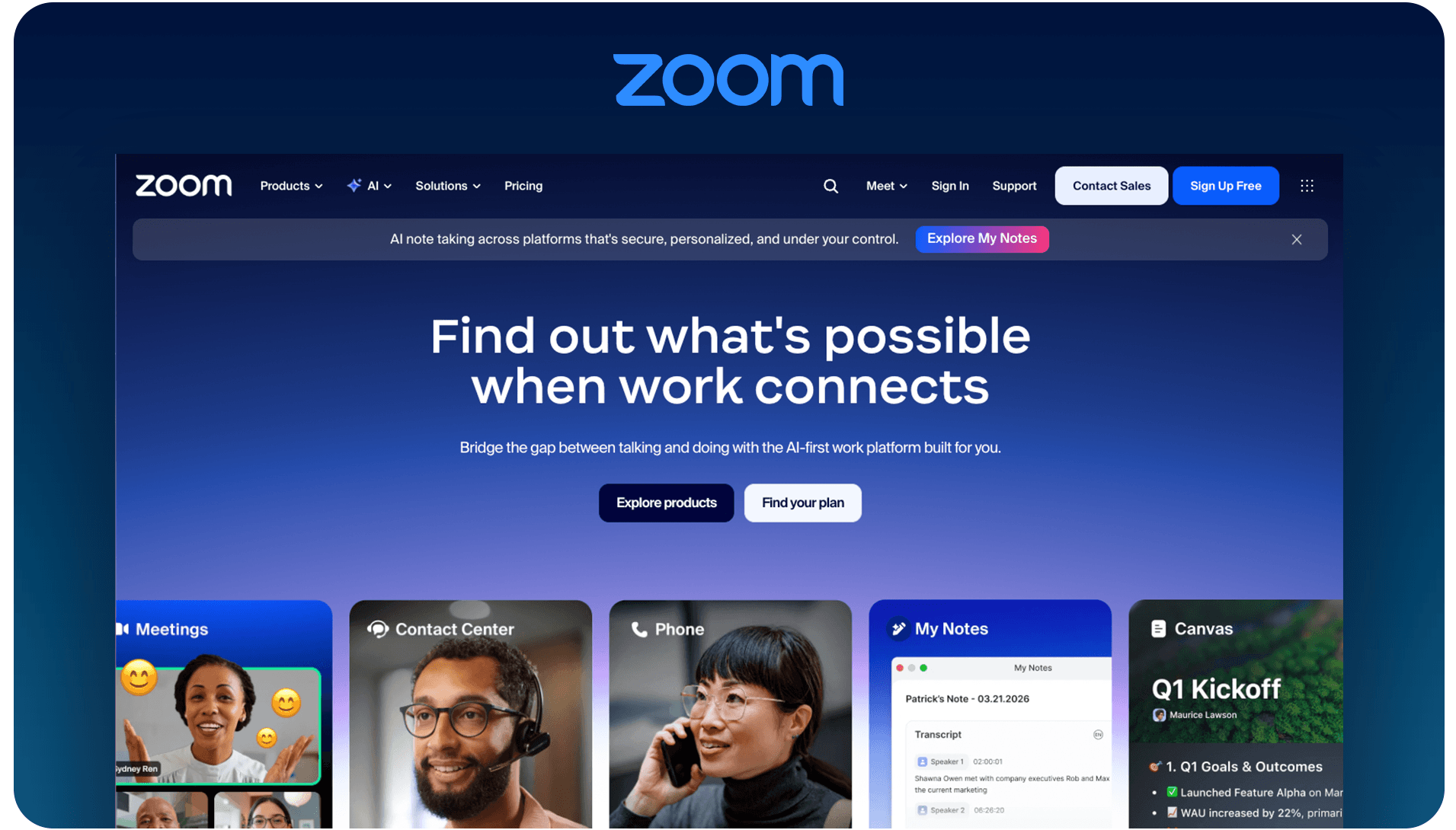
Zoom is the default for startup demos. The free tier covers unlimited 1:1 calls. Familiar to every prospect. No friction.
Core Functionality
The free tier gives you video calling that works reliably, screen sharing for product demos, and call recording. Every prospect has Zoom or can download it in 90 seconds. No special setup required.
When you’re ready to scale to a team, the Pro plan costs $149/year per person. Still lean.
The Limitation
Zoom hosts the demo perfectly. Screen sharing works. Call recording works. Your prospect sees the product.
But Zoom doesn’t write your CRM notes. After 45 minutes showing your product to a prospect who told you exactly what they need, who else is evaluating, what their budget is, and what their decision timeline is—Zoom shows a call duration and a recording. The intelligence stays in your head.
For approximately 15 minutes. Then you’re on the next call and that context is gone.
Your daily workflow: Apollo generates interested prospects. You send personalized outreach. Responses come in. You schedule Zoom calls. Demos happen.
The bottleneck: after each demo, what happens?
You should be updating HubSpot. Recording the prospect’s company size, their use case, their budget ballpark, their timeline, their competitors, their next step. Building a full prospect picture so that when you follow up, you’re following up with context and relevance, not generic persistence.
But you have 7 more demos scheduled today. And an investor call at 4. And a product meeting at 5.
So HubSpot doesn’t get updated. The prospect record shows they took a demo. It doesn’t show what you learned.
Here’s the math that kills founder-led sales:
You’re running 8 demos per day. Each demo generates rich intelligence: use case, budget, timeline, competitive status, what they liked, what concerned them, the next step. All of it needs to go into HubSpot.
If you spend 20 minutes after each demo updating HubSpot, that’s 160 minutes per day in admin work. That’s 2.5 hours every single day. That’s 12.5 hours per week. That’s 650 hours per year.
At a founder opportunity cost of $200/hour (conservative—your time is worth more), that’s $130,000 per year in opportunity cost from admin work alone.
And you won’t spend those 20 minutes. You’ll spend 5 minutes. And the record will be: “Good demo. Interested. Following up Friday.” The context is lost.
Here’s a vivid scenario: It’s Thursday. You have three expansion deals that should close this month. You’re trying to remember which one had the $100K budget and which one needed a feature you’re building next sprint. You dig through old emails. You re-read demo recordings. You schedule a call to clarify something you should have captured three weeks ago.
Three weeks ago, you knew. You learned it in the conversation. You just didn’t write it down.
At a startup, the most expensive resource isn’t money. It’s founder time. Every hour spent on CRM data entry is an hour not spent pitching investors, closing deals, or building product. Every hour spent re-qualifying prospects because context was lost is an hour not spent on new revenue generation.
The compounding problem: when you hire your first sales rep, they inherit your problem. They also spend 2.5 hours per day on CRM admin. That’s an expensive rep doing clerical work instead of selling. The CRM data entry challenge compounds with every new hire at a startup.
Companies with successful CRM strategies solve this before it compounds: they build capture habits from day one, not after hiring rep #3.
This is where voice-to-CRM becomes your unfair advantage.
After each demo, you record 90 seconds: “Medium-sized startup in fintech. Five person team, two already using free. Love the customer success workflow. Concern: integration with their existing Slack setup. Trying to decide between us and competitor X. Budget is in the $30K range. Decision timeline is 8 weeks. CFO approval required. They’re leaning toward us but want a demo of the integration first. Next step: schedule that follow-up.”
Ninety seconds. That’s the time it takes to walk from your home office to the kitchen to grab a coffee.
That 90-second voice recording gets transcribed, structured, and automatically populated into HubSpot: - Company size: 5 person team - Active users: 2 - Key feature interest: Customer success workflow - Technical blocker: Slack integration - Competitive status: In eval against competitor X, leaning toward us - Budget: $30K - Decision timeline: 8 weeks - Approver: CFO - Next action: Demo the integration - Objection: Integration concern addressed by showing integration demo
HubSpot now has the full picture. The next rep to touch the account has context. The renewal team will inherit the sale story. Management can see real conversion metrics, not activity metrics.
You don’t need to hire a VA to keep your CRM current. You don’t need to spend 2.5 hours per day on admin. You don’t need a transcription tool plus a separate data-entry tool plus a separate task management system. One tool handles all of it.
And the stacking effect: when you hire rep #1, voice-to-CRM extends to them at the same minimal cost. The marginal cost of scaling is tiny because you’re not adding admin overhead per rep. They inherit complete CRM data instead of an empty pipeline. Learn what voice-to-CRM is and how it works — and why startup teams are deploying it from day one.
Without voice-to-CRM: - 8 demos per day × 20 minutes manual CRM entry = 160 minutes per day - Weekly: 800 minutes (13.3 hours) - Annual: 640+ hours - Founder opportunity cost at $200/hour: $128,000 per year
With voice-to-CRM: - 8 demos per day × 90 seconds voice = 12 minutes per day - Weekly: 60 minutes - Annual: 48 hours - Annual opportunity cost: $9,600
Time recaptured: 592 hours per year Value of recaptured time: $118,400 Tool cost: $1,800 per year ROI: 6,478%
The number is massive because founder time is expensive. Every hour spent on admin is an hour not generating revenue, not building product, not raising capital.
There’s also a scaling angle: when you hire rep #1, voice-to-CRM extends to them at $1,800/year additional cost. Marginal cost per rep stays tiny because you’re not multiplying admin overhead. Every new rep adds selling capacity without adding administrative burden.
David’s a founder at an early-stage B2B SaaS startup. Pre-Series A. Bootstrapped to $10K MRR. Raising A round next quarter.
He starts the day reviewing Apollo. Three replies from yesterday’s outreach. Two are interested. Both express concerns David heard before and knows how to overcome. Three new Apollo sequences sent to perfect-fit prospects.
Scheduled for today: 7 demos. The first one is at 9 am.
9:00 am - Demo call with a mid-market prospect. 35 minutes. They love the product. They’re solving a specific workflow problem. They have budget approved. They want to go live in 6 weeks. They need to validate integration with an existing tool. David learns all of this.
Call ends. David speaks for 90 seconds: “Mid-market prospect in healthcare. Team of 12, two already using free. They’re solving customer retention workflow. Budget is in the $25K range. Timeline is 6 weeks to go live. They need to validate integration with their CRM system. Competitor is not in eval—this is the only tool they’re trying. They’re really interested. Next step: we demo the integration next week.”
Voice note hits the system immediately. In the next 90 seconds, HubSpot gets updated. Deal record is complete.
9:45 am - Second demo. 40 minutes. Similar richness of information.
10:30 am - Third demo. 25 minutes.
By 1 pm David has completed four demos. Each one took 25-40 minutes. He’s spent maybe 12 minutes total on voice recording. HubSpot is fully current.
That afternoon: investor call where he needs to show pipeline. He pulls up HubSpot. The view is crystal clear. Deal values, decision timelines, key blockers, competitive position—all visible. The investor asks detailed pipeline questions. David has detailed answers. Not “we have eight deals in progress.” But “we have a $25K deal closing in 6 weeks, a $35K deal that needs technical validation next week, and a $40K deal with 8-week timeline.”
One of those demos will become the Series A anchor customer. The context David captured in those 90-second voice notes will be the difference between a vague prospect relationship and a clear, documented, board-ready deal.
Two months later: David hired his first sales rep. She reviews the CRM and finds complete prospect records instead of empty ones. She knows the context. She doesn’t re-qualify. She accelerates.
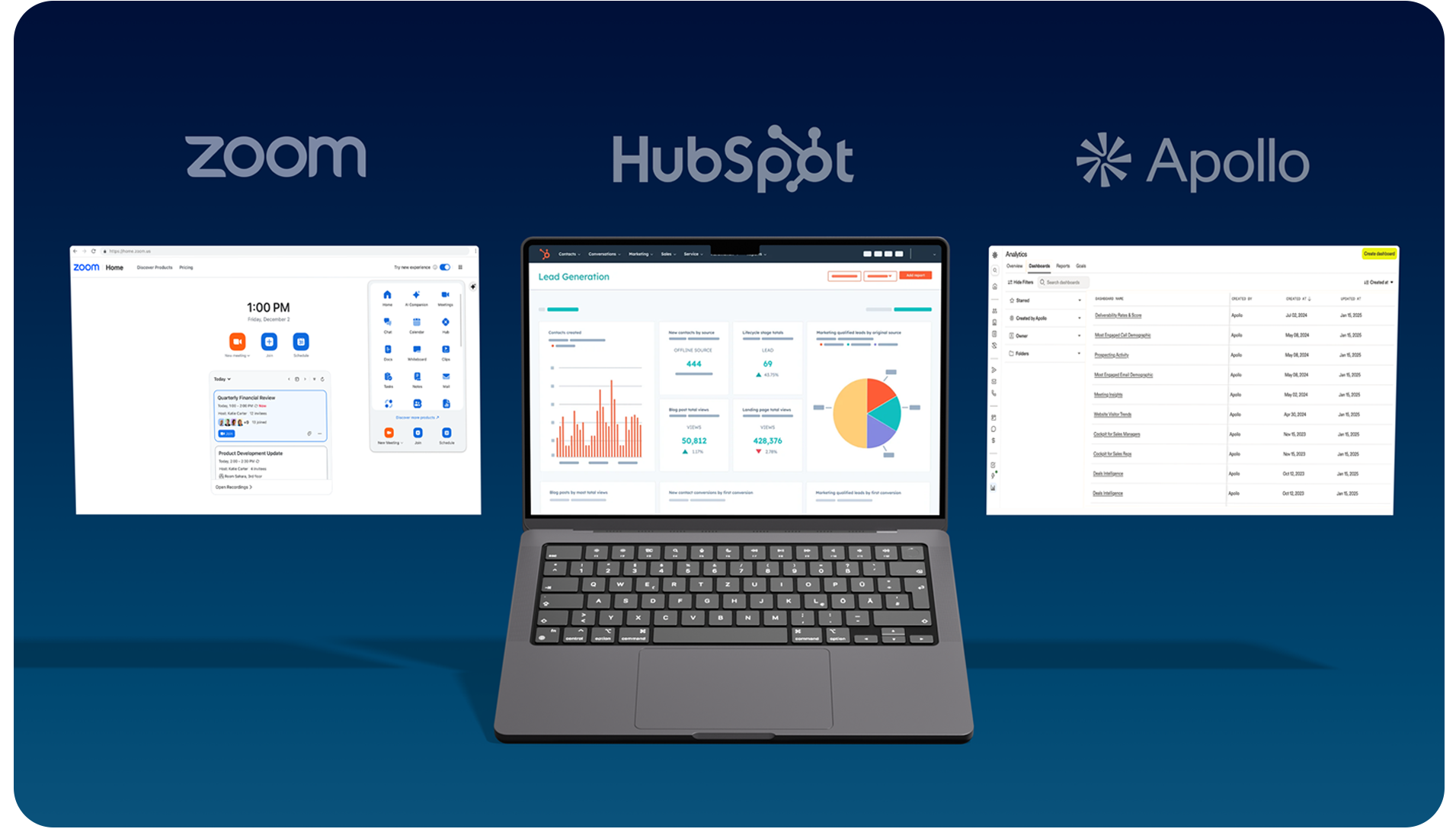
The startup sales stack is deceptively simple. HubSpot for $0-50/month. Apollo for $59/month. Zoom for $0-12/month. Total monthly cost: under $150.
That stack gets you 80% of the way to effective startup sales. But it breaks at one critical point: the handoff between conversation and CRM.
Voice-to-CRM completes the stack. It’s the force multiplier that turns founder time into billable time. It’s what makes investing in tools actually pay dividends—because the tool doesn’t just track activity, it preserves intelligence.
Every hour of founder time recaptured is an hour toward closing customers, building product, or pitching investors. For a bootstrapped startup burning runway, that’s the actual return on investment.
The three-tool stack gets you operational. Voice-to-CRM gets you efficient.


