Inside sales SDRs operate in a world of metrics: 50 calls per day. 100 emails sent. 15% connect rate. 8 qualified meetings booked. But behind these numbers lies a critical problem that undermines the entire funnel: what happens to the intelligence gathered during discovery calls?
According to SaaStr benchmarks, the average SDR-to-AE handoff process loses 60-70% of the context gathered in initial conversations. This means AEs start demos from scratch, frustrating prospects who already explained their situation—and creating a dynamic where the company’s most expensive salespeople spend the first 15 minutes of every demo asking questions that were already answered. That inefficiency compounds across every deal in your pipeline.
Sales Development Representatives (SDRs) and Business Development Representatives (BDRs) are the top-of-funnel engine in modern B2B sales organizations. Their job is not to close—it’s to qualify and convert cold or warm prospects into meetings for Account Executives. In SaaS companies, technology sales, and B2B appointment-setting organizations, SDRs often work a high-velocity model: large volumes of outreach across email, phone, and LinkedIn, with the goal of identifying prospects who meet qualification criteria and booking them for a demo or discovery call with an AE.
This high-velocity environment creates a specific tension. The tools SDRs use are optimized for activity—for getting more emails sent, more calls made, more sequences executed. That’s correct. But those same tools do almost nothing to capture the quality of conversations when connections do happen. And when a great discovery call ends and the SDR immediately dials the next number, the intelligence from that conversation starts evaporating immediately.
The right inside sales software stack matters because speed, efficiency, and conversion rates are all at stake. Here’s the 3-tool stack every inside sales team relies on—and the gap that’s quietly costing you deals.
What It Is
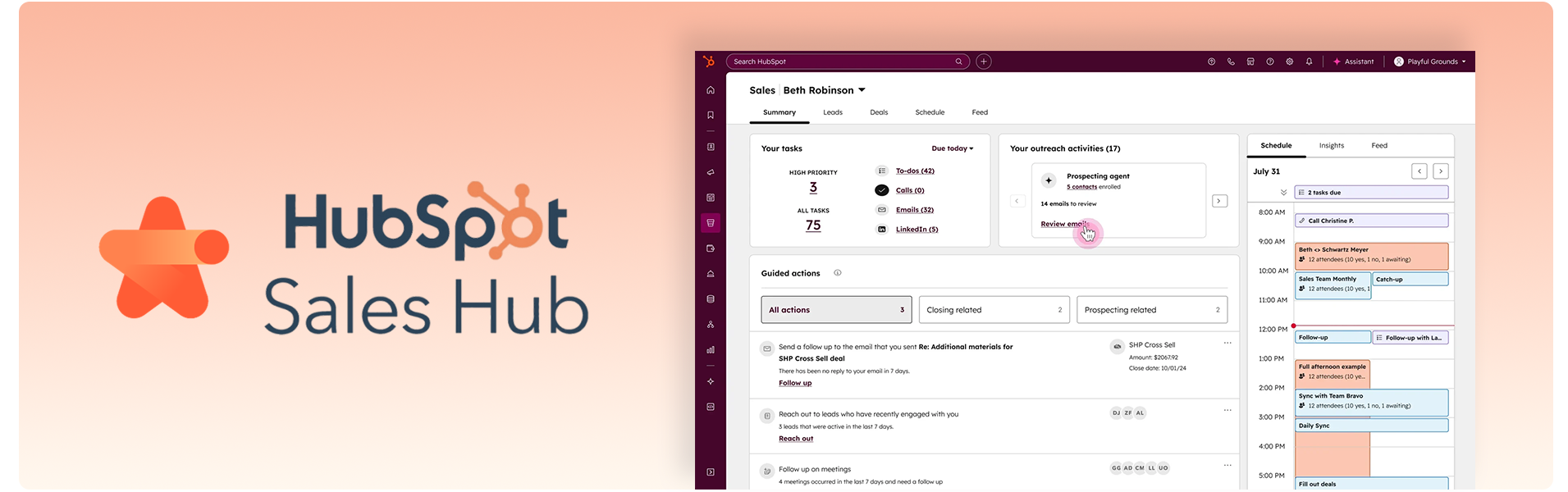
HubSpot Sales Hub is the modern CRM built for inside sales teams, particularly in SMB and mid-market organizations. It’s the system of record for every contact, company, deal, and sales activity—the place where prospect intelligence lives, pipeline visibility is maintained, and handoffs between roles are supposed to happen. Among SDR tools, HubSpot stands out for a user experience that actually drives adoption, which matters more than most sales leaders acknowledge.
Core Functionality
HubSpot’s contact and company database serves as the central repository for everything you know about every prospect and account. The visual deal pipeline gives both SDRs and their managers an immediate view of where qualified leads stand. Email integration with tracking shows you who opened which emails and when—no more guessing whether your message landed. The built-in meeting scheduler with calendar sync removes the painful back-and-forth of booking time. Sequence automation handles multi-touch follow-up cadences so leads don’t fall through cracks. Reporting dashboards show activity against goals and pipeline health. A Chrome extension enables LinkedIn prospecting without leaving your browser. And a mobile app gives you access when you’re away from your desk.
Why SDRs Need It
HubSpot’s greatest strength for SDR teams is adoption. Its clean, intuitive interface means SDRs actually use it—a problem that plagues more complex CRMs. Email tracking surfaces engagement signals without requiring you to ask prospects whether they read your message. Sequences automate the repetitive parts of follow-up so you can focus cognitive energy on conversations. And HubSpot’s dual nature as a marketing and sales platform means alignment across the funnel is built in rather than bolted on.
Pricing
HubSpot Sales Hub Starter runs $20/seat/month for basic features. Professional—which includes sequences and automation features that SDRs genuinely need—is $90/seat/month. Enterprise is $150/seat/month for advanced functionality.
What It Does Really Well
The user experience is best-in-class for sales software. Native email integration with Gmail and Outlook is seamless. The free tier lets small teams get started without financial commitment. And deployment timelines are measured in days, not months—a meaningful advantage for fast-moving sales organizations.
A typical SDR starts their day in HubSpot: review assigned accounts and contacts, check which emails were opened overnight, update deal stages as prospects respond, log calls and schedule follow-ups, queue up the next sequence for unresponsive leads.
The Limitation That Sets Up the Gap
HubSpot is excellent for managing the SDR process. But here’s what it can’t do: after a 15-minute discovery call where you learned about budget, timeline, pain points, decision process, and competitive situation—HubSpot requires you to manually type all that context into notes fields and update multiple properties.
Most SDRs are immediately on to the next call (they have 49 more to make today). The detailed notes get abbreviated to: “Good call, qualified, booked AE meeting.” The AE receives a “qualified lead” with almost zero context about what was actually discussed.
Research shows SDRs spend 21% of their day on CRM data entry challenges, despite tools like HubSpot trying to make it easier. The problem isn’t the tool—it’s the physics of high-velocity prospecting. There simply isn’t time to type comprehensive notes between calls at SDR pace.
This is a primary reason why why CRM adoption fails even with user-friendly platforms like HubSpot—the tool is easy to use, but there’s no time to use it properly.

What It Is
Outreach.io is the dominant sales engagement platform for high-velocity inside sales teams. While HubSpot is where you store what you know, Outreach is what you use to systematically reach out, follow up, and advance prospects through your pipeline. For SDRs running 50+ call and 100+ email days, Outreach is the engine that makes that activity volume possible without losing your mind.
Core Functionality
Email sequence automation handles multi-touch campaigns across dozens of steps and multiple channels. The power dialer enables SDRs to make 50 calls in 90 minutes—a rate that would be exhausting and error-prone manually. LinkedIn automation handles connection requests and InMail outreach. SMS messaging adds another channel. Call recording and voicemail drop eliminate the time spent leaving the same voicemail 30 times. A/B testing reveals which email subjects, body copy, and call scripts actually drive responses. Team templates and best practice sharing let high performers’ approaches spread across the organization. Activity tracking and reporting show individual and team performance against targets. And deep integration with HubSpot, Salesforce, and other CRMs keeps everything synchronized.
Why SDRs Need It
The math of SDR success depends on volume. If 1% of prospects convert to meetings, you need to touch 800 prospects to book 8 meetings. Outreach enables that volume without requiring 14-hour days. Beyond volume, it ensures consistent follow-up—research shows most deals require 8-12 touches, and most SDRs give up after three. Outreach removes the human tendency to give up too early by automating the follow-up schedule. Analytics reveal what’s working so teams can stop guessing and start optimizing.
Pricing
Outreach.io runs $100/user/month for the Accelerate plan up to $165/user/month for Enterprise.
What It Does Really Well
Sequences ensure no lead falls through the cracks—prospects get touched the right number of times, through the right channels, at the right intervals. The multi-channel approach combining email, phone, and LinkedIn meaningfully improves connect rates compared to single-channel outreach. The power dialer increases daily call capacity without requiring SDRs to work longer hours. Analytics reveal what messaging resonates so the whole team benefits from individual learning.
Teams using Outreach report 40-50% increases in qualified meetings booked. The automation enables SDRs to engage 3-4x more prospects without proportionally increasing working hours.
The Limitation That Sets Up the Gap
Outreach is phenomenal at automating activity—it ensures emails get sent, calls get made, follow-ups happen on schedule. But it doesn’t capture conversation intelligence.
When an SDR has a great discovery call and qualifies a lead, Outreach tracks that a call happened—duration, outcome—and triggers the next sequence step (book meeting). But what was said in that call? The pain points, the budget discussion, the competitive landscape, the organizational chart, the timeline pressures? That lives in the SDR’s head—for about 15 minutes until the next call starts.
Here’s what typically happens: The SDR has a great discovery call and qualifies the prospect. They book an AE meeting via Calendly link. They mark the opportunity as “Qualified” in HubSpot. They add a quick note: “Qualified. They need solution for X. Meeting booked for Thursday.” Then they move on to the next call.
What the AE receives: a calendar invite, a HubSpot record with minimal context, maybe a two-sentence note, and zero understanding of what was already discussed.
According to Pavilion’s 2025 SDR Research, 68% of AEs say they don’t receive adequate context from SDR handoffs, leading to 15-20 minutes of duplicate qualification questions at the start of demos—frustrating prospects who already shared that information and undermining the AE’s credibility before they’ve shown a single slide.
What It Is
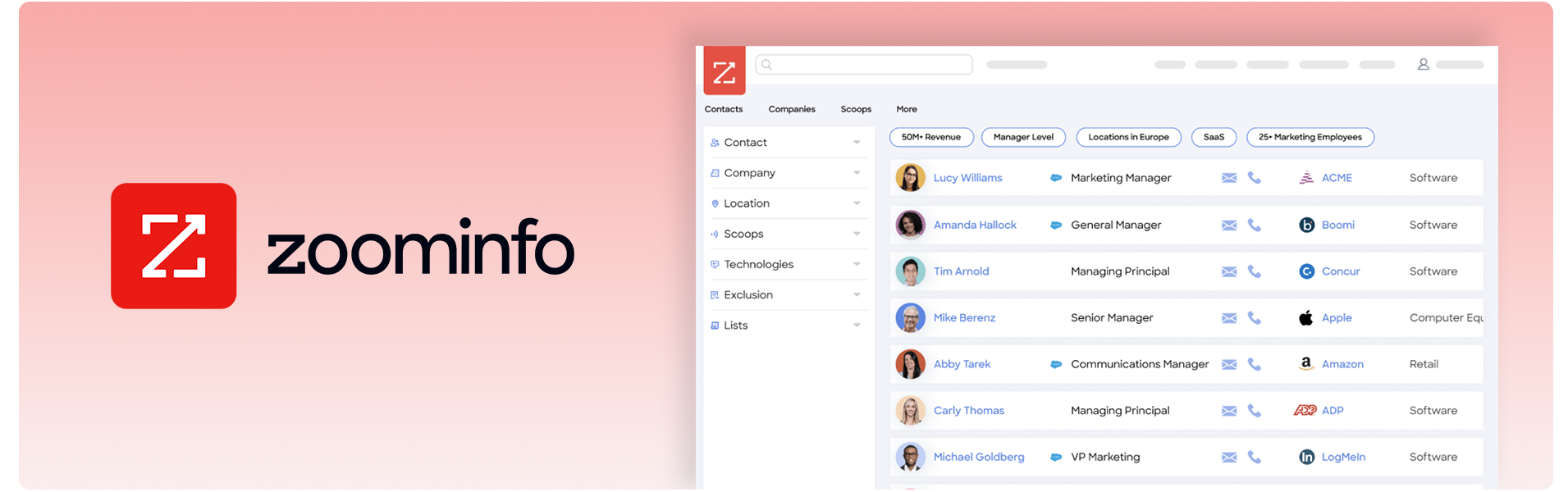
ZoomInfo is the most comprehensive B2B contact and company intelligence platform available. For SDRs, it solves one of the most time-consuming problems in prospecting: finding accurate contact information and building qualified lead lists. Without ZoomInfo or a comparable data platform, SDRs spend enormous portions of their day on research that should take minutes. ZoomInfo is the backbone of any serious inside sales SDR stack.
Core Functionality
ZoomInfo’s database includes 95M+ verified direct dial phone numbers—the difference between reaching a gatekeeper and reaching your target. Email addresses come with deliverability scoring so you’re not burning domain reputation on bad addresses. Company firmographic data covers size, revenue, industry, location, and funding stage. Technographic data reveals what software companies currently use—enabling highly relevant outreach. Intent data identifies companies actively researching solutions like yours, allowing SDRs to prioritize prospects in buying mode. Organizational charts reveal reporting structures and decision-maker relationships. A Chrome extension enriches LinkedIn profiles with ZoomInfo data in real time. And integration with CRM and engagement platforms means data flows directly into your workflows.
Why SDRs Need It
Finding the right person at the right company is the prerequisite for everything else in SDR work. ZoomInfo reduces the research phase from hours to minutes. Intent data surfaces prospects who are actively looking—the highest-leverage targeting available in B2B. Technographic data enables personalization that feels relevant rather than generic. And the sheer depth of organizational data allows SDRs to build comprehensive account maps rather than working from incomplete pictures.
Pricing
ZoomInfo doesn’t publish per-seat pricing publicly. Teams typically budget around $15,000/year for small implementations, with pricing scaling based on seats and data access tier.
What It Does Really Well
The B2B database is the most comprehensive available. Contact accuracy and verification is meaningfully better than alternatives. Intent data provides genuine buying signals, not just demographic filters. Time savings are dramatic—tasks that would take days manually take 30 minutes with ZoomInfo. And integration with the full sales stack means research flows directly into HubSpot and Outreach without manual re-entry.
The typical SDR research process: build lists of target accounts matching ideal customer profile, identify decision-makers by role and seniority, find direct dial numbers and professional email addresses, research tech stack for personalization hooks, export to HubSpot, and enroll in Outreach sequences. Teams with ZoomInfo report 2-3x improvement in contact rates and 40% reduction in time spent researching prospects.
The Limitation That Sets Up the Gap
ZoomInfo is brilliant at data discovery. But discovery is just step one.
Consider the scenario: An SDR researches a prospect in ZoomInfo and discovers they use Salesforce, Marketo, and Outreach. They see the company recently raised a Series B. They identify the VP of Sales as the decision-maker. They note the company is showing intent signals for “sales productivity tools.” This is gold. But if that intelligence doesn’t make it into HubSpot—in a structured, accessible way—it’s wasted.
The next SDR touching that account won’t see it. The AE taking over won’t know it. The account manager following up six months later won’t have context. The intelligence is only valuable if it’s captured and logged where the right people can access it at the right time.
Most SDRs research 10 prospects in ZoomInfo, find valuable intelligence, export the basic contact info to HubSpot, and mentally note the deeper insights—tech stack, intent signals, funding news. Those insights get forgotten before the first email is sent. The ZoomInfo data discovery doesn’t automatically become HubSpot data capture.
This gap is why companies with successful CRM strategies emphasize not just having great tools, but ensuring data flows between them in a way that preserves intelligence across the handoff chain.
Here’s the perfect inside sales SDR workflow on paper:
Morning Prep (8:00–9:00 AM): Open HubSpot to review day’s tasks and assigned accounts. Build a targeted prospect list in ZoomInfo based on ICP filters. Research key accounts: funding, tech stack, intent signals. Export contacts to HubSpot. Enroll in appropriate Outreach sequences.
Prospecting Block 1 (9:00–11:00 AM): Launch Outreach power dialer. Make 25-30 calls using ZoomInfo direct dials. Log outcomes in HubSpot. Automated Outreach sequences trigger appropriate follow-ups. Dashboard shows live activity against daily goals.
Lunch Research (11:00 AM–12:00 PM): Review which emails were opened using HubSpot tracking. Research accounts showing intent signals in ZoomInfo. Personalize the next outreach wave based on new intelligence.
Prospecting Block 2 (1:00–3:00 PM): Another 25-30 calls via Outreach power dialer. Respond to email replies. Book meetings for qualified prospects.
End of Day (4:00–5:00 PM): Review pipeline in HubSpot. Update deal stages. Plan tomorrow’s outreach. Check activity metrics against targets.
This workflow is efficient for activity. But notice what’s missing? Nowhere in this flow is there time to capture the intelligence from actual conversations. The system is optimized for volume—which is correct—but at the expense of context, which is devastating for downstream conversion rates.
This 3-tool stack enables:
✓ Managing prospects and pipeline (HubSpot) ✓ Automating outreach at scale (Outreach.io) ✓ Finding anyone in B2B (ZoomInfo)
But it’s missing the most critical piece: a way to capture and transfer intelligence from SDR discovery calls to AE demos.
The Real-World Scenario
Let’s follow a “qualified” lead through the SDR-to-AE handoff process.
Tuesday, 10:15 AM: SDR Sarah connects with Mike, VP of Sales at a 50-person SaaS company. In 15 minutes, she learns: they’re using a custom FileMaker CRM with only 30% adoption; they evaluated Salesforce but found it too complex; budget is approved up to $50K but needs CFO sign-off above $25K; timeline is end of Q2; Mike decides but CFO must approve larger purchases; their core pain point is pipeline visibility; they briefly looked at HubSpot; they just raised Series A and are hiring 10 new reps; and Mike’s direct quote is that they need something the team will actually use. This is rich, qualified intelligence. Sarah books an AE demo for Thursday.
Tuesday, 10:32 AM: Sarah has 47 more calls to make today. She quickly types in HubSpot: “Good call. 50-person SaaS company. Budget $50K. Need by Q2. Booked demo for Thursday with Jake (AE).”
Thursday, 2:00 PM: Jake opens HubSpot five minutes before the demo. He sees: Company name, 50 employees, SaaS. Note: “Good call. 50-person SaaS company. Budget $50K. Need by Q2.” That’s it.
Jake starts the demo and spends the first 15 minutes asking: What CRM are you using now? What’s your budget range? What’s your timeline? Who’s involved in the decision? Mike is frustrated: “I already went through all this with Sarah.”
The demo starts on the wrong foot. Jake doesn’t know they found Salesforce too complex (so don’t compare to it). He doesn’t know user adoption is their priority. He doesn’t know CFO must approve above $25K (so should probably start at a lower tier). He doesn’t know they briefly looked at HubSpot. He doesn’t know the Series A context means they’re in growth mode. None of that context made it through the handoff.
The Compounding Problem
This scenario repeats 8-12 times per day per SDR across your team. Calculate the impact: 10 SDRs booking 8 qualified meetings each per week equals 80 meetings. Fifteen minutes wasted per meeting on duplicate qualification equals 1,200 minutes—20 hours per week of AE time spent re-asking questions already answered. Add frustrated prospects who feel unheard, and AEs missing critical context leading to wrong demo focus, and the conversion impact becomes massive.
Properly contextualized demos typically close at 35-40%. Cold demos starting from scratch close at 18-22%. That 17-18 percentage point gap is directly attributable to lost intelligence in the handoff.
Why does this happen? It’s not the SDR’s fault. SDRs are measured on calls made, emails sent, and meetings booked. They’re not measured on quality of CRM notes. And there’s simply no time to write comprehensive notes between calls at SDR pace. The system is optimized for SDR efficiency at the expense of AE effectiveness.
The handoff gap is the silent killer of inside sales conversion rates.
This disconnect is a core reason why CRM adoption fails—SDRs avoid detailed data entry because there’s no time, and AEs stop trusting CRM data because it’s incomplete.
The missing piece isn’t another prospecting tool or CRM upgrade. It’s a handoff intelligence system that captures SDR discovery conversations and delivers complete context to AEs at demo time.
Voice-to-CRM technology like Hey DAN solves this by letting SDRs capture entire discovery call outcomes in 60-90 seconds of voice notes—no typing required, no time stolen from the next dial. Explore Hey DAN’s full capabilities to see how this integrates with high-velocity SDR workflows.
Same scenario, but with voice-to-CRM:
Tuesday, 10:15 AM: Sarah has the same great 15-minute discovery call with Mike. She qualifies the opportunity.
Tuesday, 10:31 AM: Instead of moving immediately to the next call, Sarah takes 90 seconds to speak into her phone:
“Just qualified Mike Johnson, VP Sales at TechCo. They’re a 50-person SaaS company using a custom FileMaker CRM. Sales team is frustrated, only 30% adoption. They evaluated Salesforce but found it too complex—don’t position us like Salesforce. Budget is up to 50K but needs CFO approval above 25K, so probably start with lower tier. Timeline is end of Q2, pretty firm. Main pain point is pipeline visibility—Mike has no idea what’s in the pipeline. They looked at HubSpot briefly, so they’ve seen modern CRM. Key thing: they just raised Series A and are hiring 10 new reps, so emphasize scalability. Mike’s quote was they need something the team will actually use—user adoption is priority number one. Booked demo for Thursday 2 PM with Jake. Mark this as qualified, $50K opportunity, close date end of Q2.”
Done. Ninety seconds. Sarah moves to her next call.
Behind the scenes, AI transcribes with 95%+ accuracy, human intelligence structures the data, and HubSpot auto-updates with everything: opportunity amount, close date, stage, current CRM and reason for leaving, budget decision process, timeline driver, pain points, competitors evaluated with their reactions, company context, demo positioning notes, and a task created for Jake’s prep.
Thursday, 1:55 PM: Jake opens HubSpot five minutes before the demo. He sees the complete picture. He knows what CRM they’re using and why they’re leaving. He knows exact budget and decision process. He knows what competitors they’ve seen and what they thought. He knows the timeline and urgency. He knows the growth context. He knows their #1 priority. He knows what not to say.
Thursday, 2:00 PM: Jake starts: “Hi Mike! Sarah mentioned you’re in growth mode after your Series A and scaling from 50 to 60 people. Congratulations! She also shared that user adoption is your top priority—your team hasn’t embraced your current FileMaker setup. Let me show you how our customers typically achieve 90%+ adoption within the first month…”
Mike is impressed: “Yes! Exactly. Great to see you listened to what I told Sarah.”
The demo is targeted, relevant, and doesn’t waste time re-qualifying. Jake closes at 35%.
Voice-to-CRM integrates with your existing SDR stack seamlessly. HubSpot auto-populates deal fields and logs comprehensive notes. Outreach.io call outcomes and next steps sync automatically. ZoomInfo research intelligence gets captured and logged rather than mentally noted and forgotten. Instead of data silos, you have complete intelligence flow: ZoomInfo research → SDR discovery → AE demo → closed deal. You can explore what voice-to-CRM is and how it works and how it bridges these gaps in practice.
Without Voice-to-CRM: - SDR note quality: 2-3 sentences, bare minimum - AE prep time: 5 minutes (reading sparse notes) - Demo qualification time: 15 minutes (re-asking questions) - Prospect frustration: High (repeating themselves) - Demo conversion rate: 18-22%
With Voice-to-CRM: - SDR capture time: 90 seconds (comprehensive) - AE prep time: 5 minutes (with complete context) - Demo qualification time: 0 minutes (jump straight to demo) - Prospect experience: “They actually listened to me” - Demo conversion rate: 35-40%
Calculate the Impact (10 SDRs booking 8 meetings/week each): - Weekly meetings: 80 - Conversion lift: 18% → 35% = +17 percentage points - Additional deals closed: 13-14 per week - Average deal size: $30K - Additional weekly revenue: ~$400,000 - Additional annual revenue: $20M+ - Voice-to-CRM cost: ~$18K/year for 10 SDRs - ROI: 111,000%
(Not a typo. The math works because the tool is cheap and the deals are large.)
The Team Impact
Total Cost Comparison:
Incomplete Stack (per SDR): - HubSpot Professional: $90/month - Outreach.io: $130/month - ZoomInfo (amortized): ~$60/month - Total: $280/month per SDR - But 50-60% of qualified deals lost to poor handoffs
Complete Stack (per SDR): - HubSpot Professional: $90/month - Outreach.io: $130/month - ZoomInfo: $60/month - Hey DAN Voice-to-CRM: $150/month - Total: $430/month per SDR - But conversion rate nearly doubles
Net Impact per 10-SDR Team: - Additional investment: $1,800/month ($21,600/year) - Additional deals closed: 500+ per year - At $30K average deal size: $15M+ additional revenue - ROI: 69,344%
8:30 AM: Marcus, an SDR at a SaaS company, starts his day. He opens ZoomInfo and builds a list of 50 VPs of Sales at mid-market technology companies—filtered by company size, recent funding, and intent signals for “sales productivity.” He exports them to HubSpot and enrolls them in an Outreach sequence tailored to recently funded growth-stage companies.
9:00 AM: Marcus launches the Outreach power dialer. His first call connects—a great discovery conversation with a Director of Sales who’s frustrated with their current tool. Immediately after hanging up, Marcus speaks for 90 seconds into Hey DAN, capturing all the intelligence: the current pain points, budget range, decision timeline, who else is involved, what competitors they’ve evaluated, and the key themes that should drive the AE’s demo. He books the AE meeting before hanging up. His HubSpot is already updated before his next dial.
11:30 AM: Marcus has completed 28 calls. He’s had six substantive conversations and booked three demos. After each conversation, he spent 90 seconds on voice capture. His HubSpot pipeline is complete and accurate. His manager can see everything in real time without asking Marcus to file a report.
2:00 PM: AE Jessica is starting a demo with one of Marcus’s qualifications from last week. She opens HubSpot and sees comprehensive notes—not just “qualified” but specific pain points, budget context, competitor mentions, decision process, and what the prospect cares most about. She tailors her demo flow accordingly. The prospect is impressed that Jessica knows their situation without asking them to repeat it. The call ends with a next step defined and a clear path to close.
4:30 PM: Marcus reviews his day in HubSpot. He made 52 calls, sent 100 emails via Outreach, booked four demos, and his CRM is 95% complete with rich context. His manager reviews the pipeline and sends a message: “Great work today—those notes on the Acme Corp opportunity were perfect. Jessica crushed the demo.” No end-of-day scramble to log notes before they fade. No abbreviated context that leaves AEs flying blind.
Weekly Impact: Marcus books 8-10 qualified meetings per week. Those meetings convert at 38%—nearly double the team average before voice-to-CRM was added to the stack. His intelligence doesn’t evaporate. His AEs trust his qualifications. His prospects feel heard. His numbers are up, his manager is happy, and he’s not spending his evenings catching up on CRM data entry.
This is what a complete inside sales SDR stack enables.
High-velocity inside sales requires the right infrastructure. The three-tool combination of HubSpot, Outreach.io, and ZoomInfo provides:
✓ A system of record (HubSpot) ✓ Scaled outreach automation (Outreach.io) ✓ Unlimited prospect intelligence (ZoomInfo)
But without the fourth piece—voice-to-CRM—you’re investing in a machine optimized for activity volume at the expense of deal quality. The intelligence your SDRs gather evaporates before it reaches your AEs, and your most expensive salespeople spend their first 15 demo minutes asking questions that were already answered.
Adding voice-to-CRM completes the stack by eliminating the SDR-to-AE handoff gap, capturing discovery intelligence in 90 seconds, ensuring AEs demo with complete context, nearly doubling demo conversion rates, and making prospects feel heard rather than interrogated.
The Investment: - 3-Tool Stack: ~$3,360/year per SDR - Complete Stack: ~$5,160/year per SDR - Additional Investment: $1,800/year per SDR - Annual Return (10 SDRs): $15M+ in additional closed revenue - Net ROI: 69,344%
For inside sales teams, the handoff gap isn’t just an inconvenience—it’s the difference between hitting quota and falling short. You’re already paying for the tools that touch the beginning and end of the funnel. Voice-to-CRM connects them.


