Enterprise B2B selling is unlike any other sales motion. When your average deal size is $250K, your sales cycle runs six to twelve months, and a single purchase decision involves a CFO, three VPs, two directors, and a procurement team—the complexity alone demands a different kind of technology stack than what works for inside sales or field sales roles. Every conversation matters. Every stakeholder has a perspective. Every piece of intelligence you gather has the potential to influence the outcome of a deal worth hundreds of thousands of dollars.
According to Forrester, 40% of enterprise deal conversations happen in person, yet only 10% of that intelligence makes it into CRM. Read that again: the conversations that are hardest to capture—executive dinners, customer office visits, trade show meetings, onsite workshops—are also the conversations where the most important decisions are made.
Enterprise Account Executives are the professionals navigating this world. They carry multi-million dollar quotas, manage 10-15 complex deals simultaneously across 6-12 month cycles, and operate in a fundamentally different environment than high-velocity sales roles. Their selling happens across a mix of virtual calls, in-person executive meetings, customer site visits, industry conferences, and sometimes dinner tables. They are relationship architects, deal orchestrators, and strategic advisors all at once.
The right enterprise sales software stack matters enormously because incomplete information is the most expensive problem in complex selling. When you don’t know what the board discussed in their internal meeting, when you forget what the CFO said about budget politics over dinner, when your colleague who covers for you during vacation is flying blind on 40% of the deal context—those knowledge gaps cost you deals worth six figures.
Here’s the 3-tool enterprise AE stack—and the gap that’s costing you the biggest deals in your pipeline.
What It Is
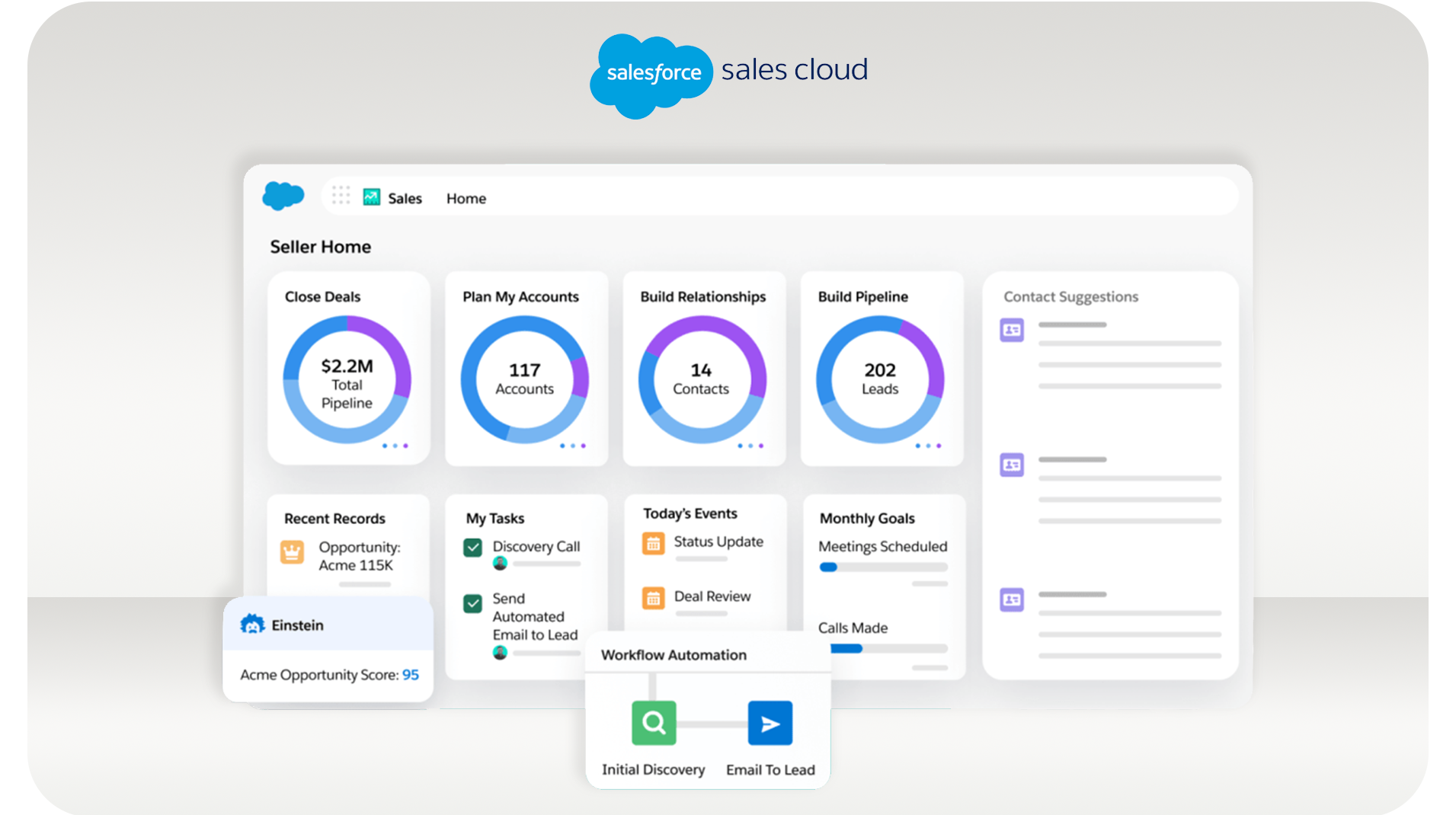
Salesforce Sales Cloud Enterprise is the industry standard CRM for complex B2B sales organizations. At the enterprise level, CRM isn’t just a database—it’s the operational backbone of multi-stakeholder deal management, the single source of truth across large selling teams, and the foundation for forecasting that executives stake their credibility on. For enterprise AEs managing portfolios of complex deals, Salesforce isn’t optional. It’s the infrastructure.
Core Functionality
Salesforce Sales Cloud Enterprise goes well beyond basic contact management. Custom objects allow organizations to build deal-specific data structures—tracking stakeholder sentiment, competitive positioning, technical requirements, procurement timelines, and success criteria in structured, reportable fields rather than freeform notes. Multi-stakeholder management lets AEs document every contact within a buying organization: their role in the decision, their level of engagement, their concerns, their champions status. Opportunity management handles complex deal structures including multi-year contracts, phased implementations, and multi-product bundles. Forecasting tools give revenue leaders the ability to analyze pipeline with precision—by territory, by product line, by close quarter. The integration ecosystem connects Salesforce to every other tool in your stack via native connectors and APIs.
Why Enterprise AEs Need It
At the enterprise level, deals are won over months by teams—not by a single AE in a single conversation. Salesforce ensures that everyone involved in a deal—AEs, SEs, customer success, leadership—is working from the same information. It provides the audit trail that shows exactly what was said, decided, and promised throughout a multi-month buying process. And when deals reach legal, procurement, and executive review stages, the completeness of your Salesforce data is what enables everyone above you to support the deal effectively.
Pricing
Salesforce Sales Cloud Enterprise runs $150-300/user/month, depending on edition and negotiated terms. For enterprise organizations, additional platform costs for integrations, custom development, and administration add to the total cost of ownership.
What It Does Really Well
Salesforce handles the complexity of enterprise selling better than any competing platform. Custom objects accommodate deal structures that off-the-shelf CRMs can’t manage. Reporting and forecasting capabilities are class-leading. Territory management and role-based access controls work at scale. And the ecosystem of integrations means Salesforce connects to virtually every other tool an enterprise sales org uses.
The Limitation That Sets Up the Gap
Here’s the uncomfortable truth about enterprise Salesforce licenses: they cost $150-300/user/month because of powerful features. But those features only matter if your AEs actually populate the data.
After a two-hour executive session at customer headquarters—where you learned about board dynamics, budget politics, the internal champion’s political capital, and the risk factors that could kill the deal—who’s typing all of that into Salesforce? When you’re flying home from a customer site visit, the last thing you want to do is open a laptop and reconstruct four hours of nuanced conversation into CRM fields. The CRM data entry challenge is especially costly at the enterprise level, where a single lost deal can represent hundreds of thousands in missed revenue. It also helps explain why CRM adoption fails in enterprise organizations — the manual data entry burden is too high for field-heavy AEs to sustain.
What It Is
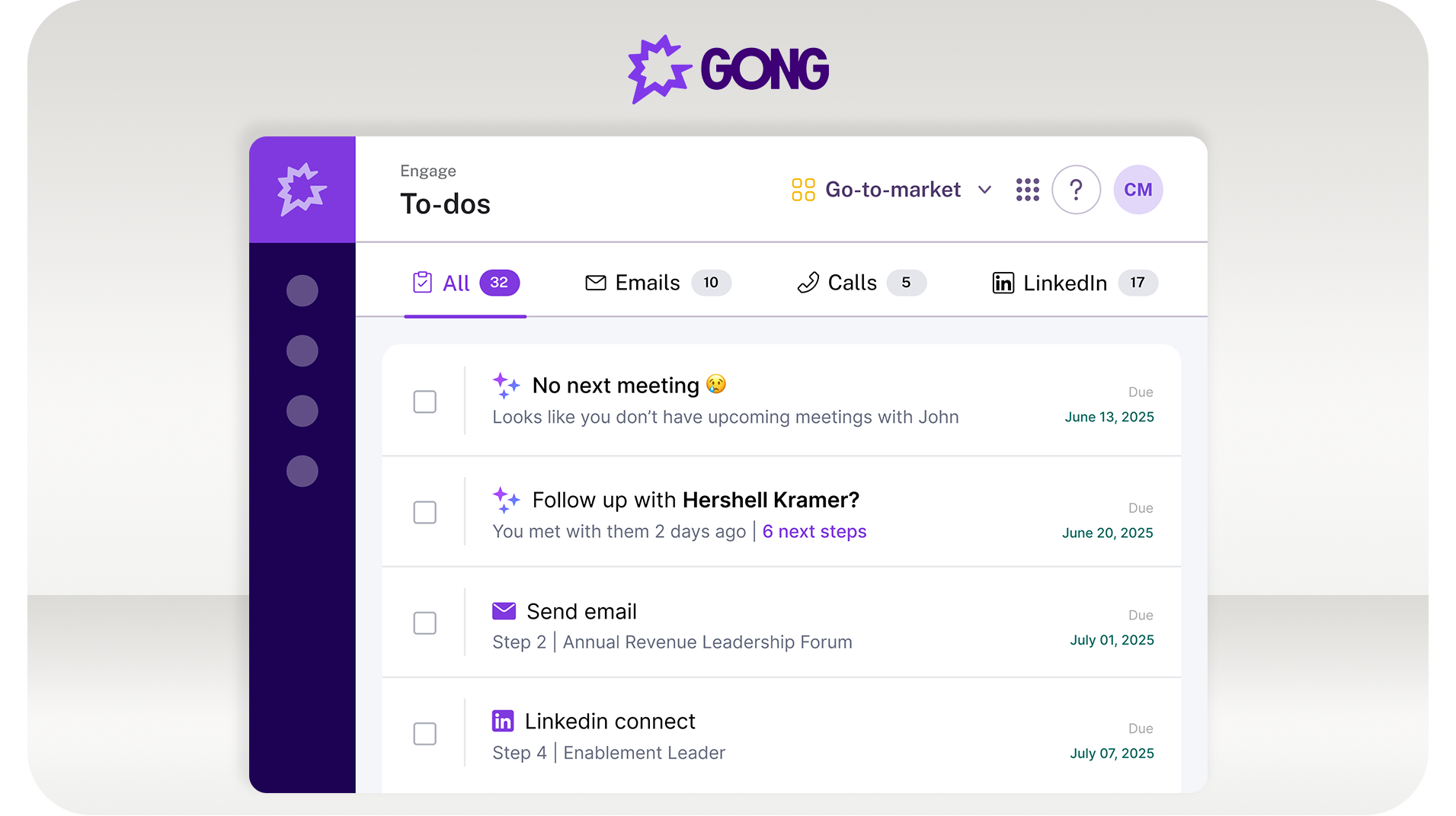
Gong is the leading conversation intelligence platform for B2B sales teams. It records, transcribes, and analyzes sales calls and video meetings—then surfaces insights about deal health, rep performance, competitive mentions, and risk factors. For enterprise AEs managing long, complex deals, Gong is transformative for the portions of the sales process that happen on Zoom, Teams, or the phone. It captures what was said, identifies patterns, and gives managers unprecedented visibility into conversations that previously existed only in individual AEs’ memories.
Core Functionality
Call and meeting recording captures every virtual interaction with complete transcription. Deal intelligence analyzes conversations over time to surface risk signals—declining engagement, competitor mentions, stakeholders going silent, deals stalling at specific stages. Coaching libraries allow managers to curate examples of excellent conversations for team learning. Competitive intelligence extraction automatically identifies when competitors are mentioned and what’s being said about them. Rep scorecards track key behaviors—talk-to-listen ratio, question asking frequency, next step clarity—at scale. Integration with Salesforce means conversation insights flow directly into deal records.
Why Enterprise AEs Need It
Enterprise selling involves dozens of conversations over six to twelve months. Before Gong, the institutional memory of those conversations lived entirely in individual reps’ notes and recollections—unreliable at best, catastrophic at worst when AEs change. Gong creates an objective record of what was said, enabling managers to coach based on actual conversations rather than rep summaries, enabling deals to survive AE transitions, and enabling the entire revenue organization to learn from what works.
Pricing
Gong runs $1,200-2,400/user/year depending on features and contract terms. At that price point, it’s one of the most significant technology investments in an enterprise sales stack—which makes its limitations all the more important to understand.
What It Does Really Well
Gong is phenomenal at what it was built to do: capture and analyze virtual sales conversations. Deal intelligence and risk scoring surface deal health signals that individual AEs often miss when they’re deep inside a deal. Coaching capabilities are genuinely powerful—managers can identify specific conversation moments to discuss in 1-on-1s rather than relying on rep self-reporting. Competitive intelligence aggregated across hundreds of calls gives revenue leaders data they’ve never had access to before.
Real-world impact: enterprise sales teams using Gong report 25-30% improvements in win rates on deals where managers actively coach using conversation data. The visibility Gong provides is transformative for teams that previously managed by pipeline stage updates rather than actual conversation analysis.
The Limitation That Sets Up the Gap
Gong is phenomenal for recorded calls. But enterprise selling isn’t just Zoom.
It’s flying to a customer’s headquarters for a four-hour presentation to their executive team. It’s dinner with the CFO where she explains the real budget politics that never come up on recorded calls. It’s a booth conversation at an industry trade show with 15 different prospects. It’s an onsite workshop with the entire buying committee where the real objections surface in whiteboard discussions. It’s a board room presentation where the deal is won or lost based on how you handle questions from people who weren’t on any of your previous calls.
None of these get recorded by Gong.
Your $2,000/year Gong license captures virtual conversations brilliantly. The 40% of enterprise deal conversations that happen in person—often the most strategically important conversations with economic buyers and final decision-makers—create zero conversation intelligence in your system of record.
The irony is stark: your most valuable conversations (in-person, with the executives who actually sign the check) generate your worst CRM data.
What It Is
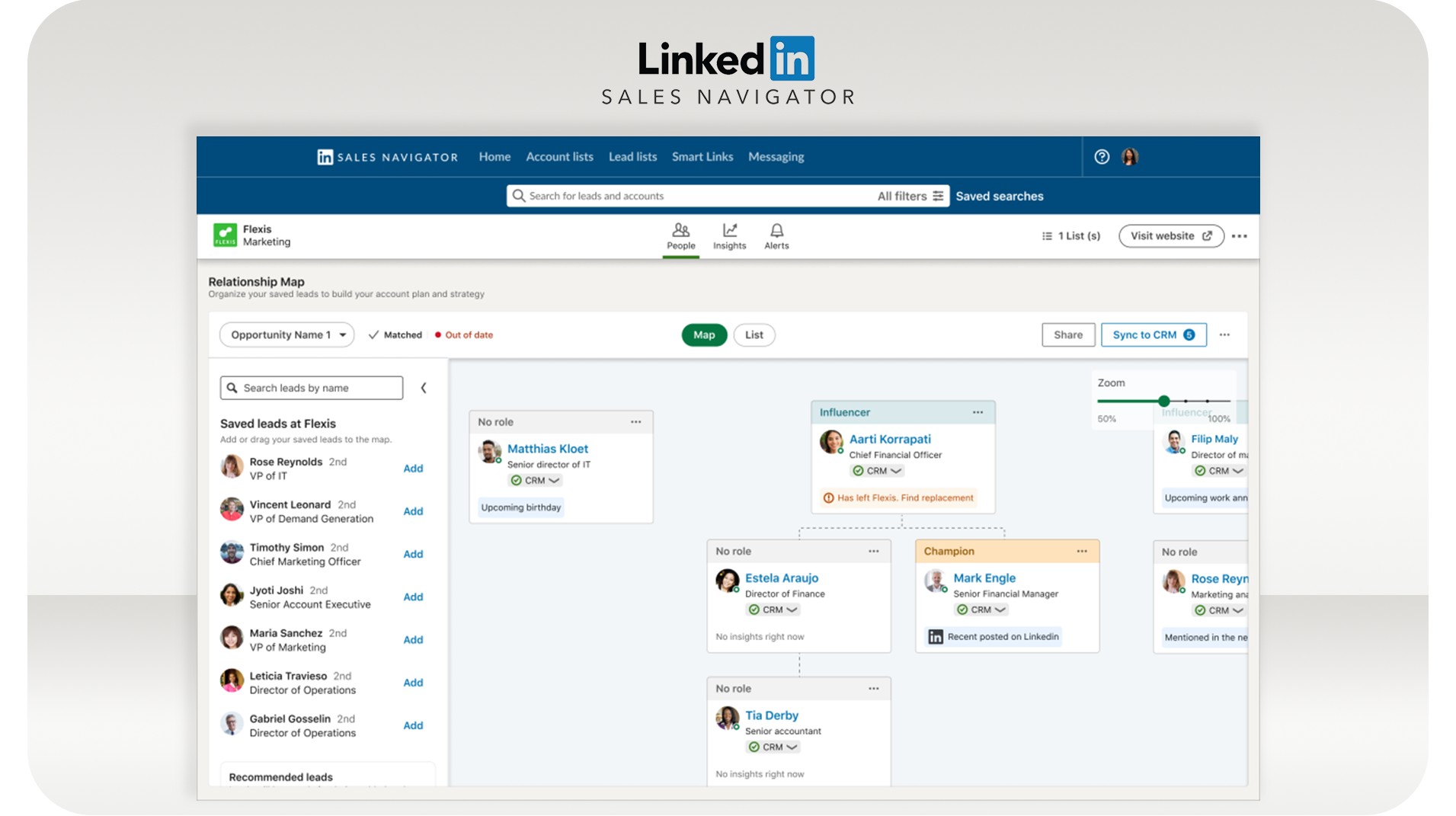
LinkedIn Sales Navigator Advanced is the enterprise-grade social selling and account intelligence platform for complex B2B deals. At the enterprise level, Sales Navigator isn’t just for finding prospects—it’s for mapping the intricate organizational dynamics of large buying committees, tracking relationship changes across 12-month deal cycles, and surfacing the intelligence that turns cold outreach into warm, informed engagement.
Core Functionality
Enterprise account mapping reveals the full organizational chart of target accounts, enabling AEs to identify not just the primary contact but every stakeholder who might influence or block a deal. Relationship mapping shows paths to decision-makers through shared connections—invaluable for securing executive introductions. Job change alerts notify you the moment a champion leaves an account or a new decision-maker arrives—both events with major deal implications. Account and contact news alerts surface trigger events: funding rounds, acquisitions, leadership changes, expansion announcements, and published priorities that create natural reasons to engage. InMail messaging enables direct outreach to senior executives who don’t respond to cold email. Shared connection identification creates warm introduction opportunities that would otherwise require months of relationship building.
Why Enterprise AEs Need It
Multi-stakeholder enterprise deals can involve 8-12 decision-makers across a buying organization. Understanding who influences whom, who has political capital, who might block the deal, and who the real economic buyer is—that organizational intelligence is as valuable as any product knowledge. Sales Navigator Advanced makes that intelligence accessible and current throughout the deal cycle.
Pricing
Sales Navigator Advanced runs $149/user/month. Team plans with additional collaboration features are priced separately.
What It Does Really Well
Account mapping for complex organizations is Sales Navigator’s core strength—it can reveal organizational structures that would take weeks to uncover through network outreach. Job change alerts provide timely intelligence that can either save a deal (you know your champion left before your competitor does) or create an opportunity (the new VP of Operations at your target account previously used your solution). Relationship intelligence through shared connections regularly enables warm introductions that bypass the gatekeeper problem entirely.
Use Case Example
An enterprise AE discovers through Sales Navigator that the new VP of Operations at their target account spent three years as a Director at a company where they successfully implemented the AE’s solution. That single insight—found in two minutes of Sales Navigator research—creates an immediate champion conversation: “I understand you’ve seen firsthand how [solution] can transform operations at scale. I’d love to hear your perspective on how we might tailor our approach for your current organization.” That conversation changes the entire deal dynamic.
The Limitation That Sets Up the Gap
Sales Navigator helps you map the buying committee and track relationship dynamics throughout the deal cycle. But after discovering that the new VP of Operations used your solution at her previous company—golden intelligence—does that insight make it into Salesforce? Or does it live in your head through the next three calls, gradually becoming less useful until it’s forgotten entirely?
Research shows that 70% of prospect intelligence gathered informally never makes it into CRM systems. For enterprise deals with 12-month cycles and multiple AEs, SEs, and executives involved, intelligence that lives in individual heads rather than shared systems is intelligence that will eventually disappear at the worst possible moment.
This gap is why companies with successful CRM strategies emphasize not just having great tools, but ensuring data flows between them reliably—including intelligence gathered from research platforms like Sales Navigator.
Here’s how the enterprise AE stack works across a typical deal:
Prospecting and Early Discovery: AE uses Sales Navigator to map the buying committee, identify shared connections for introductions, and track trigger events at target accounts. Early Zoom calls are recorded by Gong, which surfaces competitive mentions, engagement patterns, and key themes. All of this feeds into Salesforce.
Active Deal Stage: Gong records and analyzes all virtual meetings—discovery calls, demo sessions, proposal reviews, stakeholder briefings. Deal intelligence flags risk signals: a VP who was engaged on early calls going quiet, competitive mentions increasing, a close date pushed without clear reason. Sales Navigator tracks organizational changes—new stakeholders joining, champions getting promoted, blockers being reassigned. Salesforce captures everything that flows from both platforms.
Late-Stage and Executive Selling: AE travels to customer HQ for executive presentations. Flies to a conference where a key stakeholder is speaking. Hosts a CFO dinner to navigate budget conversations. Participates in an onsite technical workshop with the buying committee.
Here’s where the ideal scenario breaks down: none of those in-person conversations are captured. Gong records the Zoom calls before and after the site visit. Gong records the follow-up debrief. But the four-hour executive presentation, the CFO dinner conversation, the workshop discussion where the real objections surfaced—zero data in Salesforce.
This 3-tool stack enables:
✓ Complex deal management and forecasting (Salesforce) ✓ Virtual conversation intelligence (Gong) ✓ Relationship and account mapping (LinkedIn Sales Navigator)
But it’s missing the most critical piece for enterprise deals: a way to capture in-person conversations that Gong can’t record.
The Anatomy of an Unrecorded Deal
Consider an enterprise AE closing a $500K deal over nine months:
Your $2,000/year Gong license captured perhaps 60% of the conversations in this deal. The other 40%—the in-person meetings with economic buyers and final decision-makers, the conversations where the deal was actually won—created zero conversation intelligence in your system of record.
When your manager asks “What did the CFO say about budget?” the answer lives in your memory, not your CRM. When you’re on vacation and a colleague needs to step in to handle an urgent question? They’re blind to 40% of the deal context. When the AE transitions accounts and a new rep takes over? They’re inheriting six months of undocumented relationship history.
Calculate the Impact:
Enterprise deals aren’t lost in the Zoom calls that Gong records brilliantly. They’re won or lost in the boardrooms, executive dinners, and customer offices where Gong is absent.
That’s the cost of the unrecorded conversation problem. Not in abstract percentages—in real dollars, per rep, per year.
The irony that bears repeating: your most valuable conversations, with the executives who control the budget and make the final call, generate your worst CRM data. You invest $2,000/year in Gong to capture the conversations that are relatively easy to capture (virtual), and nothing to capture the conversations that are hardest and most critical to capture (in-person).
The missing piece in the enterprise AE stack isn’t a better CRM or a more sophisticated conversation intelligence platform. It’s a system that captures what happens when the cameras are off and the room is full of decision-makers.
Voice-to-CRM technology like Hey DAN solves the in-person capture problem by letting enterprise AEs speak their meeting intelligence—on the way to the Uber, in the hotel elevator, walking through the airport—without typing a word. Learn more about what voice-to-CRM is and how it works.
After C-Suite Meeting at Customer HQ
You’ve just spent four hours in executive presentations and working sessions. You walk to your Uber and speak for two to three minutes:
“Just wrapped the exec visit at Meridian Manufacturing. Met with the CEO, CFO, and VP of Operations. Main takeaway: the CEO is fully bought in—he kept nodding during the ROI section and asked specifically about implementation timelines. The CFO—Karen—is the gatekeeper. She wants to see the total cost of ownership model before approving anything. She mentioned they had a bad experience with a software implementation three years ago that ran 40% over budget. That’s the risk she’s managing. Timeline is accelerated: they want implementation by Q2 because of a planned acquisition in Q3 that will double their headcount. The VP of Operations is our internal champion—she’s sold, she wants this, and she’s willing to push Karen internally. Biggest risk: procurement requires three vendor bids for any purchase over $200K. We need to get the other two vendors identified and engaged so they don’t drag out the timeline. Move stage to Evaluation, update close date to April 30.”
By the time you’re at the airport, Salesforce is updated with complete executive context, stakeholder sentiment, risk factors, and next steps—all structured and searchable by anyone on your team.
After CFO Dinner
In the Uber back to your hotel, two-minute voice note:
“Had dinner with Karen from Meridian. Off the record: the real concern isn’t budget, it’s accountability. She got burned by a vendor who made promises and underdelivered. She specifically wants a contractual SLA for implementation milestones with penalties. If we can commit to that, she’s ready to approve. Also learned their fiscal year ends March 31—we need to close before March 15 for them to hit this FY budget. Competitive note: she mentioned they’ve also talked to our main competitor but found their implementation timeline too long. This is winnable if we move fast and show accountability. Task: draft milestone SLA language with legal by next Friday.”
After Trade Show—End of Day Voice Capture
Five-minute voice note covering all booth conversations:
“Long day at the manufacturing expo. Hit 15 qualified conversations. Top three to prioritize: First, the VP of Operations from Cascade Industries—they’re replacing their legacy system by Q2, budget is approved at $180K, she wants a demo next week, her direct number is in my notes. Second, Director of Supply Chain at Western Distribution—big pain around inventory visibility, asked specifically about real-time dashboards, follow up with case study. Third, Plant Manager at Torrance Steel—early stage but strong intent, told them we’d send the ROI calculator. For all 15: log in Salesforce as new leads, create follow-up tasks for each. Also heard competitive intel: our main competitor launched a new pricing model—several people mentioned it. Should flag to marketing.”
Voice-to-CRM doesn’t replace Gong. It completes it.
Gong captures your virtual conversations with the precision and analytical power it’s built for—transcription, deal intelligence, coaching insights, competitive mention tracking. Voice-to-CRM captures your in-person conversations with the flexibility and speed that field capture requires. Together, they provide complete conversation intelligence: 100% of virtual meetings documented by Gong, 90-95% of in-person meetings documented by voice capture. For the first time, your Salesforce actually reflects what’s happening across all dimensions of the deal—not just the Zoom calls.
Explore the Hey DAN’s full capabilities to understand how in-person capture integrates with your existing enterprise sales stack.
Your manager finally sees full deal context, not just the virtual half. Your colleagues can genuinely support deals when needed. Your forecast is built on complete intelligence rather than a combination of solid virtual data and missing in-person context.
Enterprise AE managing 15 deals simultaneously: - Average deal size: $250K - Percentage of deal conversations happening in-person: 40% - That intelligence previously lost: effectively complete - Voice capture time after each in-person meeting: 2-3 minutes
Win rate impact: - Current win rate (incomplete context): 27% - Win rate with complete deal intelligence: 42% - Additional percentage points: 15 - Annual deals: 20 - Additional deals won: 3 - Additional revenue per AE: $750,000/year
Voice-to-CRM cost: $1,800/year ROI: 41,567%
The math works because enterprise deals are large and in-person conversations carry outsized weight in the buying decision. Capturing the CFO dinner conversation in two minutes of voice notes isn’t a time management win—it’s a deal intelligence investment that pays for itself with a single additional closed deal.
Total Cost Comparison:
Incomplete Stack (per AE): - Salesforce Sales Cloud Enterprise: $200/month - Gong: ~$175/month (amortized annually) - LinkedIn Sales Navigator Advanced: $149/month - Total: ~$524/month per AE - But 40% of deal intelligence—the most strategically important conversations—is unrecorded
Complete Stack (per AE): - Salesforce Sales Cloud Enterprise: $200/month - Gong: $175/month - LinkedIn Sales Navigator Advanced: $149/month - Hey DAN Voice-to-CRM: $150/month - Total: ~$674/month per AE - But 95% of deal intelligence captured across all conversation types
Net Impact per AE: - Additional investment: $150/month ($1,800/year) - Additional revenue from improved win rate: $750,000/year - ROI: 41,567%
7:00 AM: David, an enterprise AE for an industrial software company, is at the airport heading to a customer site visit. He opens LinkedIn Sales Navigator to review news alerts on his accounts. He spots that his champion at Meridian Manufacturing just got promoted to VP—great news for their deal. He speaks a quick voice note: “James Chen was promoted to VP at Meridian—update his title in Salesforce and create a task to send a congratulations message and request a strategic alignment call with him in his new role.” Hey DAN updates Salesforce before David boards the plane.
10:00 AM – Customer Site Visit: David spends four hours at the customer’s manufacturing facility. He presents to the executive team, walks the production floor with the operations VP, and has a working lunch with key stakeholders. Gong isn’t present—this is in-person enterprise selling at its most critical.
2:30 PM – In the Uber: David speaks for two and a half minutes into his phone, capturing everything from the morning: executive sentiment, CFO’s specific concerns about ROI documentation, the production floor context that changes the implementation plan, the political dynamics he observed between the VP of Operations and the CTO, the risk factors he needs to address before the next touchpoint, and the specific next steps each stakeholder asked for. By the time he reaches the airport, Salesforce is fully updated.
4:00 PM – Back on the Road: David has a Zoom call with a different prospect before his flight. Gong records the entire conversation, transcribes it automatically, and surfaces a risk flag: the prospect mentioned a competitor three times in the last 20 minutes. David makes a note to address the competitive comparison head-on in the next call.
6:00 PM – Airport Lounge: David reviews his Salesforce pipeline. He can see complete, current intelligence on all 12 active deals—virtual conversations captured by Gong, in-person meetings captured by voice. His manager has reviewed several opportunities and left comments on the Meridian deal: “James’s promotion is a major win. Let’s talk strategy on how to leverage his new authority in the buying process.” David has the context to have that strategy conversation immediately.
Weekly Impact: David manages 12 complex deals across a nine-month average cycle. His in-person meetings—site visits, executive dinners, conference conversations—are now captured with the same completeness as his Zoom calls. His Salesforce reflects the full reality of every deal. His win rate on late-stage deals has improved from 28% to 41% since adding voice-to-CRM to his stack. The additional revenue from that improvement represents $900,000 in additional closed business annually—from a $1,800/year tool investment.
This is what a complete enterprise AE technology stack enables.
Enterprise deals are won in boardrooms, over dinners, at customer offices, and at conference tables—not just on Zoom. Your technology stack needs to reflect that reality.
The three-tool combination of Salesforce Sales Cloud Enterprise, Gong, and LinkedIn Sales Navigator Advanced provides:
✓ Complex deal management and forecasting (Salesforce) ✓ Virtual conversation intelligence and coaching (Gong) ✓ Organizational mapping and relationship intelligence (LinkedIn Sales Navigator)
But without the fourth piece—voice-to-CRM—you’re leaving 40% of your most important deal conversations unrecorded. The executive dinners, the C-suite site visits, the trade show conversations, the onsite workshops—those are where enterprise deals are actually decided. And your current stack has no way to capture them.
Adding voice-to-CRM completes the stack by capturing in-person conversations that Gong can’t record, preserving deal context across the full 6-12 month buying cycle, ensuring deal intelligence survives AE transitions, giving managers complete visibility rather than a virtual-only picture, and turning your $2,000/year Gong investment into complete conversation intelligence rather than partial coverage.
The Investment: - 3-Tool Stack: ~$6,300/year per AE - Complete Stack: ~$8,100/year per AE - Additional Investment: $1,800/year per AE - Annual Return: $750,000+ in additional closed revenue - Net ROI: 41,567%
For enterprise AEs, voice-to-CRM isn’t a convenience—it’s the difference between having complete deal intelligence and having a Gong library full of Zoom calls while your most important conversations disappear into unrecorded memory.


