
Real estate agents are paid by the transaction. Not by the hour. Not by the number of calls made or emails sent. By the deal that closes. This simple fact defines everything about the work.
More showings equals more buyers represented. More buyers represented equals more offers written. More offers written equals more deals that close. More closings equals more commission. The math is straightforward: transaction volume drives agent income.
This is why every minute matters. Every showing you don’t take because you’re stuck doing documentation is a showing you can’t convert to a client. Every showing you don’t take is a potential commission you don’t earn. In an industry where the average REALTOR completes 12 transactions per year, the difference between the typical agent and the top quartile — where agents complete 25 or more transactions annually — often comes down to productivity infrastructure.
The right tools do two things: they generate leads and they preserve intelligence. Leads fill the pipeline. Intelligence from showings fills the deal volume. Most agents focus heavily on lead generation. Many neglect the infrastructure that preserves showing intelligence. This is the productivity gap that separates ordinary agents from top performers.
Here’s the three-tool stack that drives real estate agent productivity, and the tool that unlocks showing capacity most agents don’t realize they’re leaving on the table.
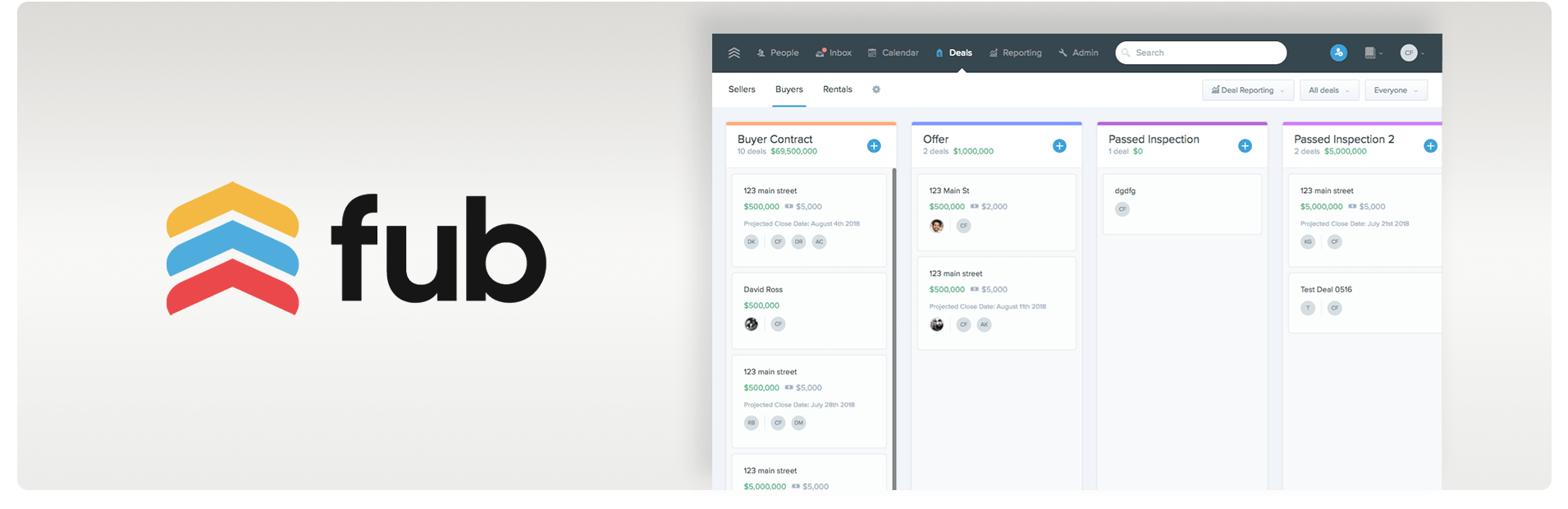
When leads come in, you need to capture them, nurture them, and move them through the sales pipeline. Follow Up Boss does this specifically for real estate.
What It Is
Follow Up Boss is a customer relationship management system built specifically for real estate agents and brokerages. It’s designed around the lead workflow, the transaction pipeline, and the team collaboration requirements of real estate sales.
Core Functionality
Follow Up Boss captures inbound leads from all sources: Zillow, Realtor.com, your own website, past clients referring friends, open houses, sphere of influence. Every lead source flows into a single system. The software then manages early nurturing — automatically responding to leads, routing them to agents, tracking follow-up tasks.
From there, Follow Up Boss moves leads through the transaction pipeline. Initial inquiry becomes a showing request. Showing request becomes a walkthrough. Walkthrough becomes interest in a property. Interest becomes an offer. Offer becomes a contract. Contract becomes a closing. The entire journey from first contact to check deposit is trackable.
For agents and brokerages, this structure is critical. You can see which agents are converting leads to showings. Which agents are converting showings to clients. Which brokers are moving deals to closing. The pipeline visibility drives accountability. It also prevents leads from falling through cracks.
Follow Up Boss includes team features so that multiple agents can manage team leads, coordinate showing schedules, and share client information. For larger brokerages, this collaboration is essential.
The Limitation
Follow Up Boss is excellent at capturing inbound leads and managing the transaction pipeline. It excels at the early stages: lead capture, initial follow-up, scheduling first showings. But after a showing, it doesn’t know what happened.
A buyer walks through a property. They see the kitchen, the backyard, the neighborhood, the condition. They form opinions. They ask questions. They express interest or concerns. They make comments about school districts, neighborhood noise, comparable properties they’ve seen. These micro-signals — the buyer intelligence that determines whether they’ll write an offer — happen in real time during the showing.
Follow Up Boss can log that a showing occurred. It can schedule the next showing. But it can’t capture what the buyer actually said, what they actually reacted to, what questions they asked, what concerns they expressed. That intelligence requires manual entry. And when you’re moving from showing to showing, that entry gets deprioritized. You type a few notes. You move on. Critical details get lost.
This is why many agents use Follow Up Boss for pipeline management but fail to populate it with the buyer intelligence that actually drives conversions. It’s a CRM data entry problem that compounds with every showing a busy agent fails to document fully.

Leads are oxygen for real estate agents. Follow Up Boss manages the pipeline. Zillow Premier Agent fills it.
What It Is
Zillow Premier Agent is a lead generation and advertising platform. Real estate agents and brokers pay for premium listing placement on Zillow.com and for qualified buyer leads that come through Zillow’s search and inquiry channels.
Core Functionality
When you subscribe to Premier Agent, your listings get premium placement on Zillow — they appear higher in search results, get featured in Zillow’s premium ad slots, show up in mobile app recommendations. Premium placement drives lead traffic. More people see your listings. More people click. More people inquire.
Premier Agent also routes buyer inquiries directly to your phone or email. A buyer searches for homes in your area, clicks “contact agent,” and their inquiry comes to you. This speed-to-lead matters enormously in real estate. The first agent to contact a serious buyer has a significant advantage.
Beyond lead generation, Zillow Premier Agent provides market analytics and pricing intelligence. You see what homes are selling for in specific neighborhoods. You understand the market data you need for pricing conversations with sellers. You have the intel to make competitive offers realistic.
The Limitation
Zillow Premier Agent generates leads. Top-of-funnel lead generation at scale is its strength. But once a lead becomes a buyer client, and you’re actively showing properties, the intelligence gathering moves offline. It happens in car conversations between showings, in casual comments during walkthroughs, in off-hand remarks about budget and timeline.
A buyer might mention that they love the kitchen but hate the backyard. Zillow doesn’t know that. The buyer might say the neighborhood is noisier than they expected. Zillow doesn’t know that. The buyer might hint that their timeline is actually flexible, or that their budget is lower than they initially stated. Zillow doesn’t know that.
This buyer intelligence — the signals that reveal what they actually want and what they’ll actually pay — never flows back to your system. It lives only in your memory. And with five to seven showings in a day, memory is unreliable.
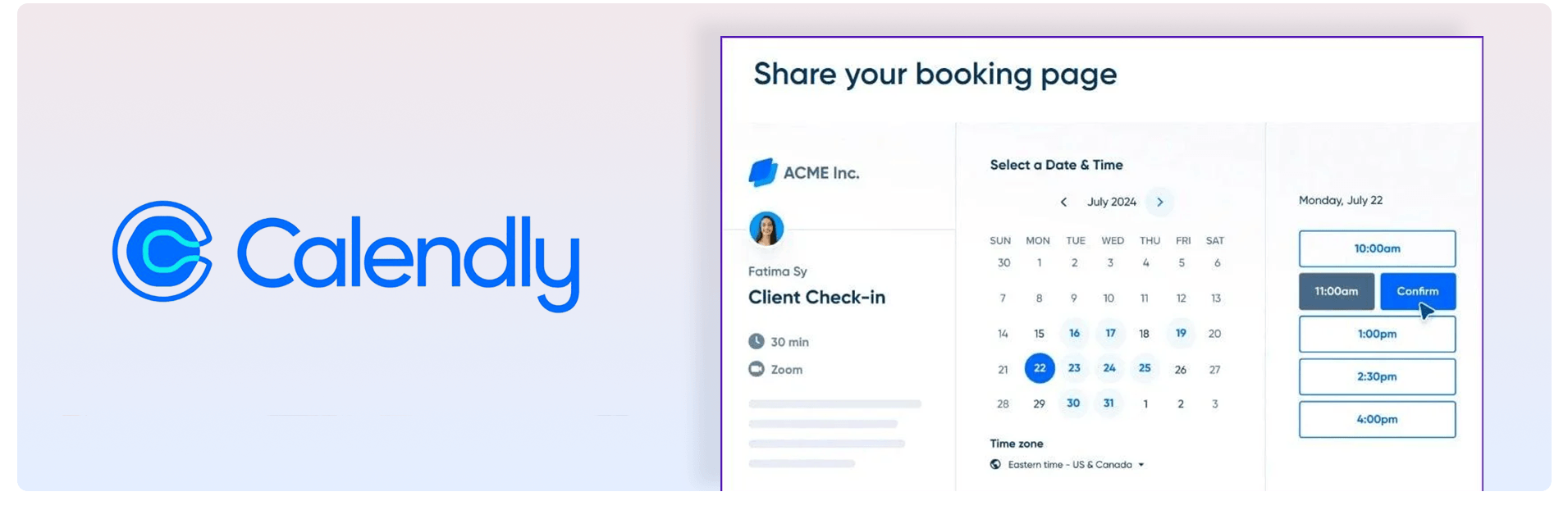
Every minute spent on scheduling is a minute not spent showing properties.
What It Is
Calendly is a calendar and scheduling tool that lets buyers self-service their showing appointments. Instead of text message tag, phone tag, email negotiations about when a showing can happen, buyers visit your Calendly link, see your available time slots, and book directly.
Core Functionality
Calendly syncs with your calendar. You block out times when you’re available for showings. You set parameters for showing duration (usually 30-45 minutes in real estate). You share your Calendly link with buyers and with other agents running open houses.
When a buyer clicks your link and sees available slots, they pick the time that works for them and book instantly. Calendly sends them a confirmation. It sends you a notification. It puts the showing on your calendar automatically.
For open houses, Calendly is even more valuable. Instead of manual sign-in sheets and phone calls to confirm attendance, interested buyers register directly through Calendly. You get an automatic list of attendees. You get their contact information. You get their timeline information.
Calendly also manages reminders. It sends the buyer a reminder 24 hours before the showing, and another reminder an hour before. This dramatically reduces no-shows because buyers are reminded of their commitments.
The Limitation
Calendly is perfect at doing one thing: filling your calendar with showing appointments. It removes scheduling friction. A packed calendar of showings is the result.
But a packed calendar only translates to closings if you remember what each buyer said at each property. With five to six showings in a single day, the details from showing number one fade by showing number five. The buyer who expressed love for the brick exterior at the first property blurs with the buyer who hated the colonial style at the second. The buyer concerned about school district quality at property three might be confused with the buyer concerned about neighborhood walkability at property four.
Calendly fills the pipeline. Something else needs to capture the intelligence that turns showings into offers.
A typical productive Tuesday for an agent looks like this:
Morning: Zillow Premier Agent sends three qualified buyer leads to your phone. You call them, qualify them, and schedule showings for the afternoon.
Lunch: Calendly shows you have five confirmed showing appointments between 1 PM and 5 PM, plus two open house registrations from this weekend. Your calendar is full.
1:00 PM showing one: Beautiful two-bedroom in the neighborhood, showing takes 45 minutes, buyer expresses interest in the kitchen and patio. You walk to your car.
2:00 PM showing two: Three-bedroom, slightly above the buyer’s initial budget, but the location appeals to them. They ask about school district. You answer. They ask if there’s flexibility on closing timeline. They mention they might have more budget than initially stated. Showing takes 45 minutes. You walk to your car.
3:00 PM showing three: Colonial, spacious, but needs some work. Buyer is concerned about age of roof. They ask about the heating system. You walk to your car.
4:00 PM showing four: Shows well, but buyer mentions it feels noisy during the 45-minute walk-through. They compare it unfavorably to property one. They ask about comps. You walk to your car.
5:00 PM showing five: Final showing of the day. This property has everything the buyers mentioned wanting, but you’re exhausted. The showing quality reflects it.
You’re done with field showings. But now comes the documentation.
Here’s the problem that prevents real estate agents from multiplying their transaction volume: buyer intelligence evaporates when it’s not captured immediately. It’s a core reason CRM adoption fails even among motivated agents who genuinely want to keep their pipeline current.
You complete five showings. Each one involved substantive buyer reactions, specific comments about property features, preferences revealed, concerns raised, budget signals, timeline hints, competitive comparisons. This intelligence determines whether these buyers will write an offer.
Now, if you were going to follow up with these buyers effectively, what would you need to remember?
Property one: buyer loved the kitchen and patio. You’d want to send them a follow-up message specifically mentioning the kitchen and patio. “I know you loved the kitchen and patio in the first property we saw. I found another home with a renovated kitchen and large deck — want to see it?”
Property two: buyer expressed interest in neighborhood, asked about school district, might have more budget than initial. You’d want to follow up highlighting school district data and asking if they want to explore properties at a higher price point.
Property three: buyer concerned about roof age. You’d want to follow up with an inspector’s report or engineering assessment.
Property four: buyer found it too noisy. You’d want to follow up avoiding showing them properties near busy intersections.
Property five: you were exhausted and didn’t capture much.
Now, realistically, what are you actually going to remember?
Without capturing buyer intelligence immediately, you remember maybe property two and the school district question. You probably forget the specific things that excited them about property one. You definitely forget whether property four’s noise concern was the traffic on Main Street or the proximity to the airport. And property five is basically a blank.
So when you follow up, your messages are generic. “I wanted to check in and see if any of the properties interested you.” You don’t reference specific things they said. You can’t demonstrate that you listened and understood their preferences. You sound like every other agent doing a bulk follow-up.
Buyers don’t respond to generic follow-up. They respond to agents who remember the specific things they said and showed specific properties in response.
This is why buyer intelligence capture is the difference between an agent who converts 20% of showings to offers and an agent who converts 40%. The 40% agent remembers that the buyer loved the kitchen. The 20% agent sends a generic follow-up.
From a business development perspective, the impact is even more significant. With five to six showings per day and incomplete memory of what each buyer said, you can’t effectively build a buyer base. You can’t develop long-term relationships. You’re stuck in a transactional cycle: generate lead, show properties, hope they write an offer, move to next lead.
Agents who multiply their transaction volume do something different. They capture showing intelligence. The agencies with the most successful CRM strategies share this trait: post-showing capture is treated as non-negotiable, not optional admin. They follow up with specific references to what buyers said. They build relationships. They get repeat business. They develop referral networks with buyers who know they were listened to.
The intelligence gap is why good agents plateau. They fill the calendar with showings. But incomplete intelligence from those showings prevents them from converting at the rates top performers achieve.
Voice-to-CRM technology is the missing piece that bridges the gap between Calendly (filling the calendar) and Follow Up Boss (capturing the intelligence).
The mechanism is simple. After each showing, between showings when you’re walking back to your car or driving to the next location, you speak a voice note. You don’t type. You don’t pull out your laptop. You literally speak.
“Buyer really responded to the kitchen renovation and the patio. They asked about the school district specifically — seemed very interested in the neighborhood. When I mentioned the price, they indicated they might have more budget available. Timeline is flexible. Next step: send them a list of properties in this neighborhood with A-rated schools and renovated kitchens.”
That voice note is 90 seconds maximum.
That voice note gets captured securely. It’s transcribed. It’s structured into Follow Up Boss automatically. Explore Hey DAN’s full capabilities to see exactly how real estate showing notes get processed. The buyer profile gets updated with their specific preferences. The property preferences get logged. The follow-up task gets created with specifics you actually said.
Now when you follow up, you don’t need to remember anything. Your Follow Up Boss record has it. “I know you loved the kitchen renovation and patio at the second property. I also remember you were specifically interested in A-rated school districts. Here are three properties with both: [homes].”
That’s a follow-up that sounds like you listened. That’s a follow-up that generates response.
Here’s where the real estate income difference appears.
Without voice-to-CRM, here’s your typical day: - You book five to six showing appointments via Calendly - You complete those showings - You sit in your car or drive between showings for 20 minutes per showing, typing notes into Follow Up Boss - Each showing creates 20 minutes of documentation - 6 showings × 20 minutes = 120 minutes total - That’s two hours of documentation embedded in your day - Net result: you squeeze in four to five productive showings
With voice-to-CRM: - You book six to seven showing appointments via Calendly - You complete those showings - You speak a 90-second voice note after each showing - Each showing creates 90 seconds of documentation - 7 showings × 90 seconds = 10.5 minutes total - Net result: you fit in six to seven showings with minimal documentation time
The difference is two to three additional showings per day.
At average conversion rates, two additional showings per day equals approximately one additional transaction per month. That’s 12 additional transactions per year above your baseline. At an average real estate commission of $8,000 per transaction, that’s $96,000 in additional annual income.
Voice-to-CRM cost: approximately $1,800 per year.
Additional income: $96,000.
Return on investment: 5,233%.
Meet Lisa. She’s a real estate agent in Austin. She’s been in the business for six years. She typically completes about 18 transactions per year, generating approximately $144,000 in commission income (at $8,000 average commission).
On a typical day, Lisa schedules four to five showings. After each showing, she spends 20 minutes updating her notes in Follow Up Boss and following up with buyers. The documentation isn’t lazy — it’s necessary. But it’s also time-intensive.
Her buyer follow-up is decent. But it’s often generic because by the time she sits down to compose follow-ups, the specific details from each showing have faded. She can’t remember which buyer specifically loved the master bathroom or was concerned about the roof age.
Now introduce voice-to-CRM. On the same Tuesday, Lisa schedules six showings instead of four. After each showing, she speaks a 90-second voice note. Her buyer preferences get logged automatically. Her follow-ups become specific and personalized.
By year-end, Lisa completes 26 transactions instead of 18. She generates $208,000 in commission instead of $144,000. The additional income is $64,000.
For a $1,800 annual investment in voice-to-CRM, she earned an additional $64,000. Her commission rate went from $144,000 to $208,000. She moved from the median agent to the top quartile.
The difference wasn’t better leads. Zillow Premier Agent was generating the same lead volume. The difference wasn’t better CRM. Follow Up Boss was the same. The difference was capturing buyer intelligence immediately so that she could follow up effectively and convert showing-to-client at higher rates.
Here’s how the three-tool stack compares to the complete stack with voice-to-CRM:
The metrics that matter most are showing capacity and data quality. When documentation happens manually after a long day of showings, information loss is inevitable. You remember maybe 60% of the specific things buyers said. You definitely forget which property each preference or concern was attached to. When documentation happens via voice note immediately after each showing, capture is nearly complete. You remember everything. Your follow-ups are specific and effective.
Lisa’s Tuesday in Austin:
8:30 AM: Morning market check. Zillow Premier Agent has delivered two new qualified buyer leads. She calls them, qualifies them, and schedules afternoon showings.
9:00 AM: Calendly shows seven confirmed showing appointments. Her calendar is packed.
1:00 PM showing one: Charming three-bedroom bungalow in the central neighborhood. Buyer responses: loves the original hardwood floors, concerns about the small kitchen, interested in the neighborhood. Lisa walks to her car. She speaks a 90-second voice note capturing the buyer’s love of hardwoods, kitchen concerns, and neighborhood interest. The note gets captured into Follow Up Boss automatically.
2:00 PM showing two: Modern home, contemporary finishes. Buyer mentions the open floor plan is exactly what they want. They ask about smart home features. They express interest in the modern kitchen. 90-second voice note. Captured.
3:00 PM showing three: Historic property, charming but needs updates. Buyer is concerned about deferred maintenance but loves the location and lot size. 90-second note. Captured.
4:00 PM showing four: Suburban property, newer construction. Buyer compares it to property one and mentions it feels sterile by comparison. They’re concerned about neighborhood turnover. 90-second note. Captured.
5:00 PM showing five: Property specifically identified as a match for buyer’s stated preferences. Strong buyer reaction. Multiple questions. Strong buying signals. 90-second note. Captured.
6:00 PM showing six: Open house from another agent. Lisa registers three new buyers and captures their information via Calendly. All three get follow-up showings scheduled for the next day.
7:00 PM: Lisa goes home. All six showings are documented. All buyer preferences are captured in Follow Up Boss. All next steps are clearly defined. She’s not sitting in her car for two hours typing notes. She’s not relying on fading memory to recall what each buyer said.
8:00 PM: Lisa composes follow-up messages. Because the specific buyer intelligence is captured in Follow Up Boss, her follow-ups are personalized and specific. To buyer two: “I know you loved the open floor plan and modern kitchen. I found a newer construction that has both plus smart home features you were interested in. Want to see it tomorrow?” That’s a follow-up that generates response.
Same field day. Same effort. Dramatically different outcomes. Lisa fit in six showings instead of four. She captured complete intelligence. She can follow up effectively. Her conversion rate will improve.
Real estate is fundamentally a transaction business. The agents completing the most transactions earn the most commission. This isn’t complicated.
The limiting factor for most agents isn’t lead generation. Zillow Premier Agent and other lead sources provide enough qualified buyers. The limiting factor is showing capacity. And showing capacity is limited by documentation burden.
After a showing, you need to capture what happened: what the buyer loved, what they were concerned about, what questions they asked, what signals they gave about budget and timeline. That intelligence is the foundation for effective follow-up. Without it, your follow-ups are generic. Generic follow-ups don’t convert.
The complete real estate stack captures this intelligence. Follow Up Boss manages the pipeline. Zillow Premier Agent generates the leads. Calendly removes scheduling friction. And voice-to-CRM captures the buyer intelligence that converts showings into offers.
This is the stack that moves agents from 18 transactions per year to 26. From $144,000 in annual commission to $208,000. The difference is showing capacity and intelligence capture.
Every agent has the same 24 hours. The agents completing 25+ transactions per year are using that time differently. They’re capturing the intelligence that converts showings to clients.


