Letting AI write your CRM notes unsupervised produces records that look complete and are confidently wrong. Here are the five failure patterns of AI-only capture — and the hybrid model that actually works.

The pitch was irresistible: let AI listen to your sales calls and write the CRM notes automatically. No more data entry, perfect records, reps freed to sell. Then the records came back subtly wrong — a misheard number here, a hallucinated commitment there, a summary that missed the one comment that actually mattered. And because the errors were plausible, nobody caught them until a deal went sideways. This is the AI-only capture problem, and it's quietly undermining CRM data quality at companies that thought they'd solved it.
AI is genuinely transformative for sales productivity. But "AI writes your CRM data unsupervised" and "AI helps capture your CRM data accurately" are very different propositions, and the gap between them is where deals die. As we've written in when 'close enough' costs you the deal, approximate capture is worse than no capture in one specific way: it looks complete, so nobody double-checks it. This article breaks down why pure AI capture fails, and what a better model looks like.
These aren't reasons to avoid AI. They're reasons to deploy it correctly. Each pattern below is a place where unsupervised AI capture breaks down in practice.
Language models generate fluent, plausible text — including when they're wrong. An AI note-taker that mishears "we can't commit to Q1" as "we can commit to Q1" produces a clean, confident, entirely incorrect record. The fluency is the danger: errors don't look like errors, so they propagate into forecasts and follow-ups unchallenged.
AI summarization optimizes for the main thread of a conversation. But in sales, the decisive intelligence is often a throwaway line — a passing mention of a competing vendor, a hint about budget timing, an offhand political comment. Summarization smooths exactly these away, discarding the high-value signal as noise.
A human rep knows that the CFO's tone shift when pricing came up matters more than the twenty minutes of feature discussion. AI weights by frequency and prominence, not by sales consequence. It can't make the judgment call about which two sentences in an hour actually change the deal. This is the intelligence that, as we note in the lead intelligence reps discover but never log, requires human discernment to recognize.
When an AI writes a record and no human verifies it, who's accountable when it's wrong? The rep didn't write it. The vendor disclaims it. The result is a CRM full of records nobody owns — and in regulated industries, unowned records are a compliance liability, not just a data-quality one.
AI capture trained on or operating over incomplete data amplifies existing problems. Feed it a noisy call and it produces a confident summary of noise. As we cover in why dirty CRM data costs more than you think, bad data doesn't stay contained — it compounds through every downstream decision, and AI accelerates the compounding.
The instinct to remove humans entirely from capture is understandable — humans are the bottleneck, so eliminate them. But it misdiagnoses the problem. The bottleneck isn't human involvement; it's human friction. The goal should be removing the friction while keeping the judgment, not removing the human and keeping the errors.
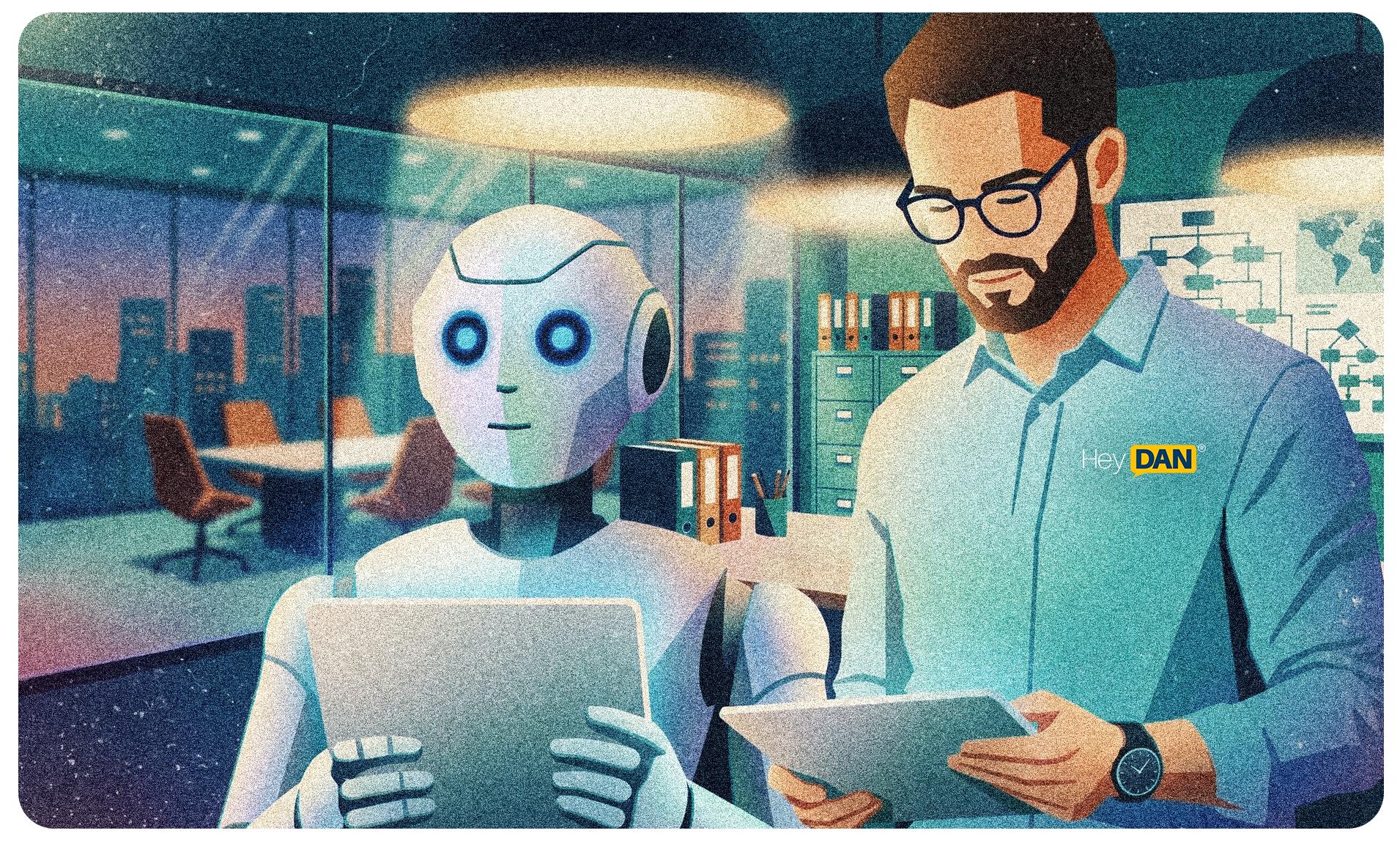
The model that actually works pairs AI's speed with human judgment. The rep speaks the substance of a call. AI structures it into CRM fields instantly. The rep glances at the result and confirms or corrects it in seconds — catching the misheard number, adding the signal AI smoothed away, owning the record. This is the architecture behind how voice-to-CRM captures conversations: AI handles the transcription and structuring, a human ensures it's right. You get the productivity of automation without surrendering accuracy or accountability.
This isn't a compromise — it's the correct design. It mirrors how every other high-stakes AI application works: AI proposes, a human disposes. The same discipline that governs a well-built modern sales execution stack applies to capture: automation earns its place by making humans faster, not by replacing the judgment that keeps the data trustworthy.
AI belongs in your capture workflow. It just doesn't belong there alone. The companies getting durable value from AI capture are the ones that used it to eliminate the typing, not the thinking. They kept a human in the loop for the two seconds it takes to verify — and in exchange, they got CRM data that's both complete and correct. The ones chasing full automation got neither.
A sales team rolled out an AI note-taker across their pipeline, thrilled to eliminate manual entry. For a quarter, it worked beautifully, until it did not. On a key renewal, the AI transcribed a customer's careful hedge, we are exploring options for next year but nothing is decided, as a firm commitment to renew and expand. The clean, confident note flowed into the CRM and up into the forecast.
The deal was marked as strong. Resources were allocated against the expected expansion. Then the customer churned. When the team went back to the recording, the misread was obvious, but nobody had caught it, because the AI's note read as authoritative and no human had verified it. The error did not look like an error, which is precisely why it survived all the way into a board-level forecast.
This is the failure mode that makes unsupervised AI capture dangerous rather than merely imperfect: it produces plausible, confident records that nobody double-checks. As we argue in when close enough costs you the deal, approximate capture is worse than sparse capture in one specific way, it hides its own gaps behind fluent text.
If AI is already writing your CRM records, a few checks reveal how exposed you are:
Not at all. AI belongs in the capture workflow, it just should not operate there unsupervised. The failure is removing the human entirely; the fix is using AI to eliminate the typing while keeping a human in the loop for the seconds it takes to verify accuracy and ownership.
In a hybrid model the verification is built into the workflow and takes seconds, because the rep confirms a structured result while the conversation is fresh, rather than auditing a transcript later. It is designed so accuracy does not depend on anyone remembering to check.
The human step is a seconds-long confirmation, not a rewrite. The rep speaks the substance, AI structures it, and the rep glances and confirms. It is faster than manual entry and far more accurate than unsupervised AI, which is the whole point.
If any of this sounds familiar, the fastest way to understand your own situation is to see how a modern capture layer works in practice. Explore how voice-to-CRM captures every customer conversation — turning what your team says into structured, complete CRM records without the manual data-entry burden.

Hey DAN is the market-leading Voice-to-CRM solution, trusted by more than 10,000 sales professionals and serving 50 of the 60 largest asset management firms worldwide. Founded in 2006, Hey DAN combines fast AI transcription with human verification to turn spoken conversations into accurate, structured CRM records, giving sales teams back hours every week and giving leadership the clean data modern go-to-market strategy depends on.
Follow Hey DAN


